Screenshot
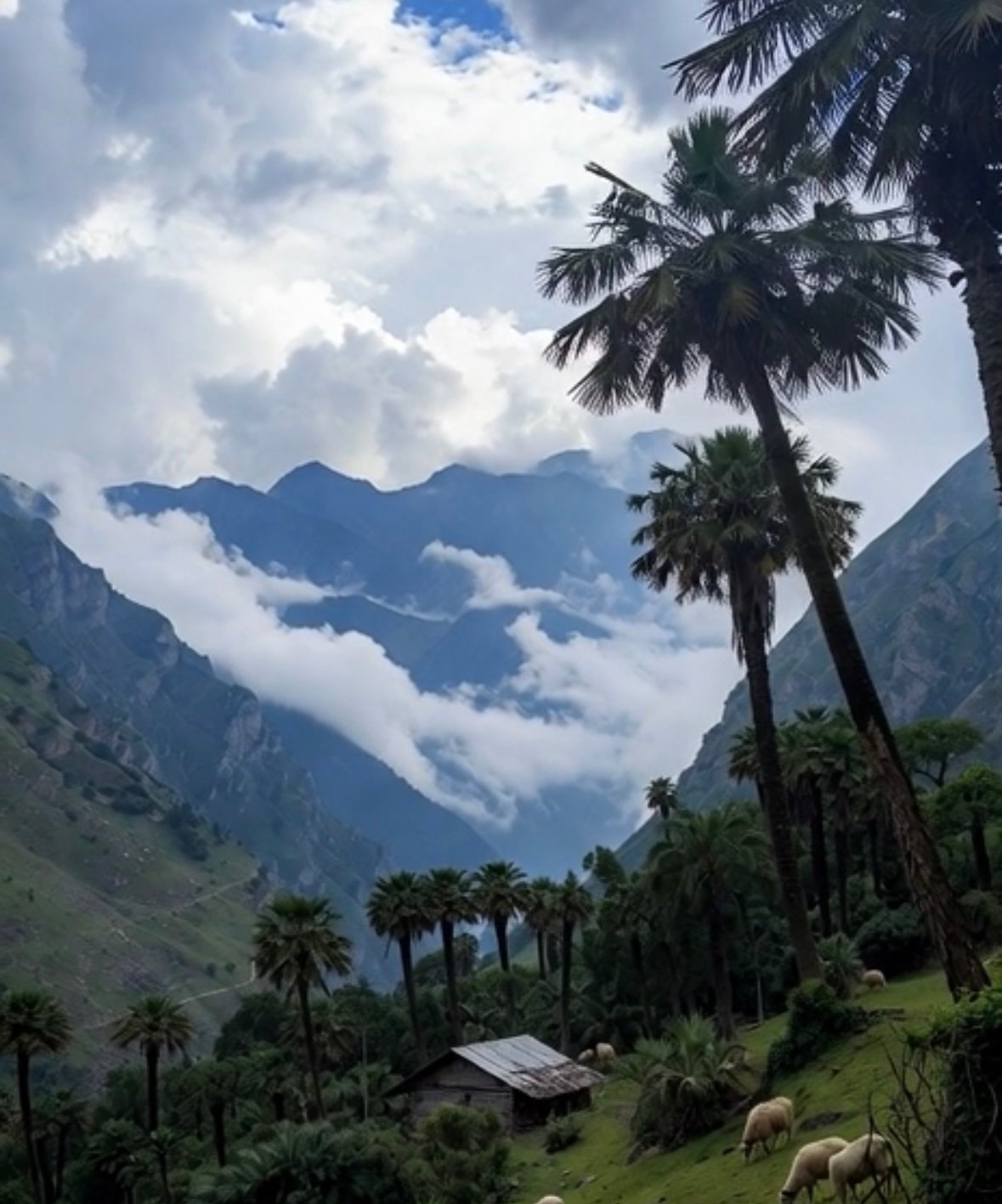
Pakistan’s northern areas stand as a living testament to nature’s raw grandeur—a realm where jagged peaks pierce the heavens, glaciers gleam like frozen rivers of time, and clouds drift so low they seem to caress the earth. Spanning the provinces of Gilgit-Baltistan and Khyber Pakhtunkhwa, this region encompasses the Karakoram, Himalaya, and Hindukush mountain ranges, home to five of the world’s fourteen peaks over 8,000 metres, including the iconic K2. Here, the phrase “a land where clouds meet mountains” is not mere poetry but a daily reality, where mist-shrouded valleys and alpine meadows invite hikers and trekkers to immerse themselves in unparalleled beauty. This essay explores the sublime aesthetics of these northern landscapes while highlighting the abundant opportunities for mountain hiking and tracking that make them accessible to adventurers worldwide.
The Majestic Landscapes: A Symphony of Peaks and Valleys
The northern areas of Pakistan unfold like a grand canvas painted by geological forces over millennia. The Karakoram Range, often called the “Roof of the World”, dominates with its black granite spires and vast ice fields. K2, at 8,611 metres, the second-highest mountain on Earth, rises dramatically from the Baltoro Glacier, its pyramidal summit a beacon for mountaineers. Nearby, the Concordia junction—where the Baltoro and Godwin-Austen glaciers converge—offers a 360-degree panorama of towering summits, including Gasherbrum I and Broad Peak, all exceeding 8,000 metres. In the Hunza Valley, the apricot blossoms in spring create a pastel haze against the backdrop of Rakaposhi (7,788 metres), whose flawless cone reflects in the Hunza River like a mirror to the gods.
Further south, the fairy-tale meadows of Deosai Plains, the world’s second-highest plateau at over 4,000 metres, burst into wildflowers during summer—poppies, edelweiss, and primroses carpeting the tundra in vibrant hues. Nanga Parbat (8,126 metres), known as the “Killer Mountain” for its treacherous slopes, guards the western edge, its Rupal Face presenting the tallest mountain face on the planet, a sheer 4,500-metre wall of rock and ice. The Swat Valley, with its emerald rivers and pine-clad hills, evokes a gentler beauty, where terraced fields cascade down to the Swat River, and ancient Buddhist stupas whisper of a rich historical tapestry.
What elevates this beauty to the ethereal is the intimate dance between clouds and mountains. At dawn in Skardu or Gilgit, low-hanging clouds swirl through passes like the Babusar Top, veiling peaks in mystery before the sun burns them away. In the monsoon-influenced lower valleys, mist rises from glacial lakes such as Attabad—its turquoise waters a striking contrast to the surrounding barren cliffs—creating illusions of floating islands. This interplay of elements fosters a sense of timelessness, where the air is crisp with the scent of juniper and wild thyme, and the silence is broken only by the distant rumble of avalanches or the call of golden eagles soaring overhead.
Hiking and Trekking Opportunities: Pathways to Paradise
The northern areas are a trekker’s paradise, offering trails for every level of adventurer, from day hikes to multi-week expeditions. These paths not only showcase the region’s beauty but also promote sustainable tourism, with local communities providing guides, porters, and homestays that immerse visitors in Pashtun, Baltit, and Wakhi cultures.
For beginners, the Fairy Meadows trek in Diamer District is an ideal introduction. A short jeep ride from Raikot Bridge followed by a 3-5 hour hike leads to grassy plateaus at 3,300 metres, offering unobstructed views of Nanga Parbat’s north face. The trail winds through birch forests and wildflower fields, where clouds often blanket the meadows at night, creating a dreamlike atmosphere. Similarly, the Rush Lake trek near Nagar Valley is a moderate 2-3 day journey to one of the highest alpine lakes at 4,694 metres, with panoramic vistas of the Karakoram giants.
Seasoned trekkers flock to the legendary Baltoro Glacier and K2 Base Camp trek, a 14-20 day odyssey covering 100+ kilometres from Askole village. Starting amid terraced farmlands, the path ascends past Paiju Peak, through the Trango Towers’ surreal granite spires, to Concordia—the “Throne Room of the Mountain Gods”. Here, trekkers camp under starlit skies where the Milky Way rivals the snowy peaks, and clouds form halos around summits at sunrise. The Snow Lake (Biafo-Hispar) trek, linking two massive glaciers over 100 kilometres, is another epic, crossing the Hispar Pass at 5,150 metres amid crevasses and ice pinnacles.
In Swat and Chitral, lighter options abound: the Kalash Valleys hikes reveal indigenous festivals and wooden architecture, while the Tirich Mir viewpoint trails in Chitral offer glimpses of Pakistan’s highest non-eight-thousander at 7,708 metres. Shorter day hikes, such as to Shigar Valley’s cold deserts or Khaplu’s fortified palaces, blend natural splendour with cultural heritage.
Safety is paramount; permits are required for restricted areas like the Concordia region (obtainable via tour operators in Islamabad or Skardu), and hiring certified guides mitigates risks from altitude sickness, weather changes, and glacial hazards. The best season spans June to September, when trails are snow-free and wildflowers peak, though shoulder months offer solitude and autumnal golden larch forests.
A Call to the Wild: Preserving the Pristine
The beauty of Pakistan’s northern areas lies not just in their visual spectacle but in their power to evoke humility and wonder. Clouds meeting mountains symbolise this harmony—a reminder of nature’s dominance and our fleeting presence. Yet, climate change threatens with receding glaciers and erratic weather; responsible trekking, through initiatives like the Central Karakoram National Park, ensures this legacy endures.
In venturing here, one does not merely hike; one communes with a landscape that has inspired poets like Allama Iqbal and explorers like Eric Shipton. Pakistan’s north is a sanctuary where the soul finds elevation amid the peaks—a land where clouds eternally meet mountains, inviting all to witness its timeless allure.
About the Author