The widening rural-urban divide in Pakistan represents one of the most significant socio-economic and political shifts in the country’s modern history. Traditionally structured around an agrarian rural economy and localized urban trading hubs, Pakistan is undergoing a rapid, chaotic demographic transition. This shift is not merely geographical; it is reshaping the country’s political landscape, straining its fragile economy, and pushing its municipal infrastructures to the brink of collapse.
The Core Paradox: At the heart of this transition lies a profound contradiction—while the rural agrarian economy is rapidly decaying, forcing millions to migrate, Pakistan’s major cities are economically stagnant and unable to provide the employment these migrants seek.
1. The Decay of the Agrarian Economy
While approximately 61% of Pakistan’s population remains rural, public resources and development initiatives remain heavily concentrated in urban centers. This structural neglect has exacerbated rural poverty, with the national poverty head-count estimate sitting at 44%, falling disproportionately hard on rural households lacking basic services. Today, the rural agrarian lifestyle is dying, evidenced by agriculture’s share of national employment shrinking to approximately 41%. This decline is driven by several systemic factors:
- Climate Change and Water Scarcity:Pakistan is among the countries most vulnerable to climate change. Erratic weather patterns, devastating floods, and prolonged droughts have shattered the predictability of crop cycles. Furthermore, the country is rapidly transitioning from a water-stressed to a water-scarce nation, directly impacting crop yields.
- Land Fragmentation and Soil Degradation:Due to inheritance laws and generational divisions, agricultural land has been fragmented into smaller, economically unviable plots. Concurrently, over-cultivation, lack of modern farming techniques, and poor soil management have severely depleted soil fertility.
- Rising Input Costs and Lack of Subsidies:The skyrocketing prices of fertilizers, pesticides, seeds, and electricity—compelled by fiscal consolidation and IMF-mandated structural adjustments—have made farming financially unsustainable for smallholders.
As farming ceases to guarantee survival, a massive “push factor” is created. The rural youth find themselves trapped; with no alternative local industries to turn to, they are abandoning ancestral lands in unprecedented numbers. This leaves rural areas with an increasingly aging population and depleted economic vitality, while fueling a massive domestic migration wave.
2. The Great Urban Migration and its Municipal Burden
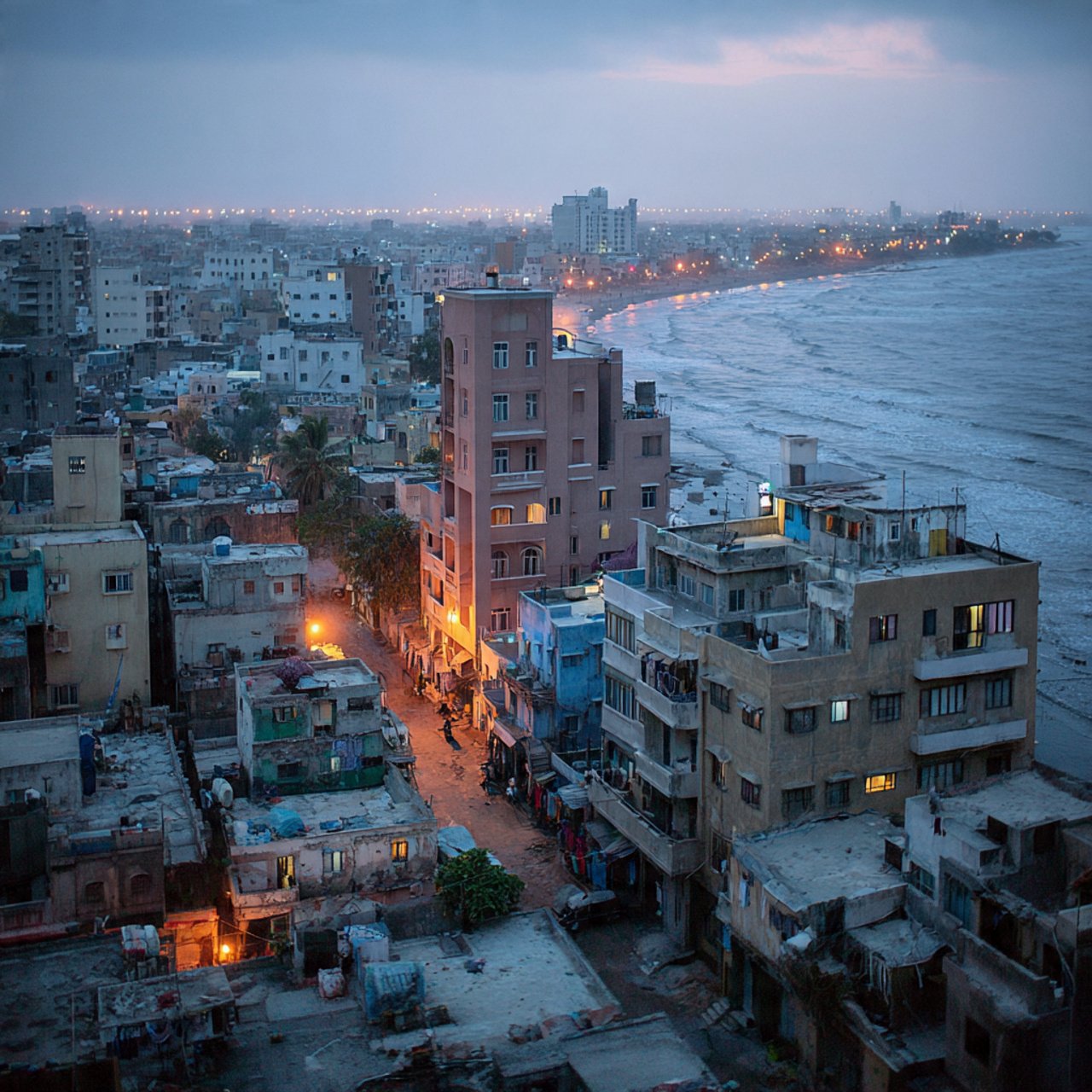
The massive influx of people into urban areas has placed an unsustainable burden on municipal administrations. Pakistan’s urbanization is not the result of healthy industrial pull factors; rather, it is driven by rural push factors. Cities are expanding horizontally and vertically at a rate that completely outpaces municipal planning. The consequences of this uncontrolled growth are visible across all urban centers:
- Encroachment and Slums:Informal settlements (katchi abadis) are proliferating rapidly. Today, over 40% of urban dwellers in Pakistan’s major cities live in these slums, entirely cut off from clean drinking water, sanitation, electricity, or safe housing.
- Administrative Overwhelm:Municipal corporations lack the financial resources, administrative capacity, and technical expertise to manage solid waste, maintain public transit, and provide basic healthcare and education to a surging population.
3. A Tale of Uneven Urban Realities: Karachi vs. Punjab’s Cities
The impact of this migration is highly unequal, exposing deep regional disparities, structural governance deficits, and skewed political priorities:
Karachi: The Collapsing Economic Engine
Karachi, the country’s economic backbone and sole megacity, is in a state of severe administrative decay. Despite contributing approximately 55% of federal tax revenues, the city suffers from chronic underinvestment and a lack of empowered local governance. This disparity is reflected in global metrics: Karachi consistently ranks near the bottom of global liveability indexes, placing between 169th and 173rd globally due to severe deficits in infrastructure, stability, public safety, and healthcare. The demographic weight of migrants from across the country has completely overwhelmed its crumbling drainage systems, public transit, and municipal water supplies, leaving the city at the mercy of informal cartels.
Lahore and the Twin Cities: The Managed Enclaves
In stark contrast, Lahore and the Twin Cities (Islamabad-Rawalpindi) have managed demographic pressures far better due to political prioritization and lopsided provincial resource allocation. Islamabad remains the top-ranked city in Pakistan for quality of life, benefiting from planned infrastructure, green belts, and lower crime rates. Lahore has preserved its functionality through massive, highly subsidized transport infrastructure investments, such as the Metrobus and Orange Line rapid transit systems. While both Lahore and the Twin Cities benefit from being ranked among the most globally affordable cities for cost of living, this managed stability is fragile. Lahore, in particular, is beginning to buckle under environmental strain, characterized by catastrophic winter smog, depleting groundwater tables, and uncontrolled housing society expansions.
Faisalabad: The Industrial Outlier
Among secondary cities, Faisalabad stands out as a highly resilient exception. Driven by a robust industrial surge, Faisalabad registered over 950 new industrial units within the last two years alone, generating nearly 50,000 new jobs, primarily in the textile sector. This industrial density has been accompanied by impressive resource management; recent multi-dimensional sustainability assessments rank Faisalabad higher in sustainability than both Lahore and Rawalpindi, owing to its lower population density relative to its economic output.
The Stagnant Rest
Aside from Faisalabad, secondary and tertiary cities like Gujranwala, Multan, Hyderabad, and Quetta remain structurally stagnant. They suffer from the same overcrowding and poor infrastructure as the major metros, but completely lack the state investment or industrial agglomeration to cope, trapping them in a state of urbanized stagnation.
4. The Urban Paradox: Jobless Urbanization
The most alarming aspect of Pakistan’s urbanization is the central paradox: people are migrating to cities in search of jobs, yet the cities themselves have no jobs to offer.
In classic economic models, urbanization is synonymous with industrialization; rural agricultural labor transitions into high-productivity urban manufacturing. In Pakistan, this transition has broken down into “jobless urbanization.” While cities generate approximately 55% of the national GDP, this economic activity has failed to translate into formal job creation. This structural failure is highlighted by stark labor statistics:
- Skewed Unemployment Rates:Contrary to the expectation of finding better opportunities in cities, urban unemployment sits at 8.0%, which is significantly higher than the rural unemployment rate of 6.3%.
- The Youth Crisis:The crisis is most acute among the younger demographic, with youth unemployment surging to 12.5%.
- The Rise of the Low-Productivity Informal Sector:High energy tariffs, political instability, and inconsistent economic policies have led to widespread factory closures, particularly in the manufacturing and textile sectors. Prevented from entering formal, high-value industries, rural migrants are forced into low-wage, insecure informal labor—working as daily wage laborers, street vendors, or domestic helpers. This does not lead to upward social mobility; instead, it simply relocates rural poverty to an urban setting.
5. The Governance Vacuum: Delimitation Politics and Paralyzed Local Bodies
This compounding crisis is not merely an accidental byproduct of rapid growth; it is a structural flaw actively sustained by the political economy of Pakistan. The country’s governance model exhibits a profound disconnect between demographic realities and political priorities.
The Census and Constituency-Centric Politics
While census data clearly outlines the rapid, massive demographic shift toward cities, the political elite views these population dynamics through a purely electoral lens. Rather than using demographic data to recalibrate urban resource allocation, master planning, or civic infrastructure, political parties focus strictly on the manipulation of constituency boundaries (delimitation). The rural-dominated political elite, whose power base is rooted in feudal agricultural lands, fears losing legislative seats—and thus, central authority—if electoral representation is shifted to urban centers to accurately match the population. Consequently, urban centers are chronically underrepresented, and demographic shifts are politically neutralized to maintain the status quo.
The Castration of Local Governments
At the heart of the mismanagement lies the absolute powerlessness of local bodies. Although Article 140-A of the Constitution of Pakistan mandates that each province must establish a robust local government system and devolve political, administrative, and financial authority to elected representatives, provincial leadership has systematically resisted this. Following the 18th Amendment, which devolved massive authority from the federation to the provinces, provincial cabinets became highly centralized autocracies. They refused to devolve power further down to the municipal level. Mayors and local councilors in megacities like Karachi are left with virtually no authority over zoning, revenue generation, transport, or municipal services.
Misallocated Capital and Irrelevant Spending
Because provincial legislators control local development funds (using them as patronage tools to secure votes), spending is disconnected from genuine economic development. Massive provincial budgets are poured into highly visible, capital-intensive “brick-and-mortar” projects—such as signal-free corridors, underpasses, and elite housing schemes—which offer lucrative opportunities for rent-seeking and immediate electoral optics. Meanwhile, critical, foundational investments in public health, municipal water treatment, primary education, and localized poverty alleviation are systematically starved of funds.
Conclusion
The widening rural-urban divide in Pakistan is a structural crisis that threatens the nation’s stability. The collapse of the agrarian economy is driving millions into cities that are structurally and economically unequipped to absorb them. While Lahore, the capital, and industrial hubs like Faisalabad maintain varying degrees of functionality, Karachi and secondary cities are buckling under the pressure.
The shift is as much political as it is economic. The inability of cities to absorb migrants has created an entire class of disaffected, unemployed urban youth, which serves as a major driver of political instability. This is exacerbated by a political elite that treats census data as an electoral chessboard rather than a development roadmap, and provincial administrations that actively paralyze local governments to preserve their patronage networks.
To prevent this demographic shift from triggering a complete administrative and economic collapse, Pakistan must move beyond cosmetic infrastructure. Genuine structural reform requires enforcing Article 140-A to create financially autonomous city governments, depoliticizing the delimitation process, and aligning public spending with human development and economic productivity rather than political patronage. Without these changes, the country’s potential “demographic dividend” will rapidly solidify into its greatest security and economic liability.
About the Author