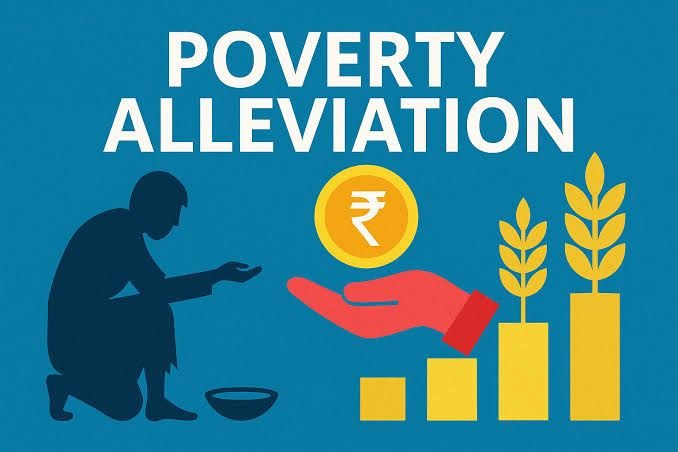
The intertwined challenges of poverty and inflation have long perplexed policymakers, economists, and development practitioners. For over two decades, Nobel laureates Abhijit Banerjee, Esther Duflo, and Michael Kremer have dedicated their careers to unraveling the intricate lives of the poor, offering a nuanced perspective that challenges conventional wisdom. Their groundbreaking work, recognized with the 2019 Nobel Prize in Economic Sciences, has reshaped the global discourse on poverty alleviation, providing actionable insights to address the economic pressures exacerbated by inflation. By employing rigorous experimental methods, their research illuminates the behaviors, priorities, and constraints of the world’s poorest populations—over 700 million people living on less than $2.15 a day, according to 2022 World Bank estimates.
The Pioneering Work of Banerjee, Duflo, and Kremer
At the heart of their contributions is the Abdul Latif Jameel Poverty Action Lab (J-PAL), founded in 2003 by Banerjee and Duflo at the Massachusetts Institute of Technology (MIT), with Kremer as a key collaborator. J-PAL’s mission is to evaluate poverty alleviation strategies through randomized controlled trials (RCTs), a method borrowed from medical research but adapted to economics. Over the years, J-PAL has conducted 70-80 trials across countries like India, Kenya, and Bangladesh, generating a wealth of data on what works—and what doesn’t—in the fight against poverty. Their book, Poor Economics: A Radical Rethinking of the Way to Fight Global Poverty, synthesizes these findings, offering a compelling narrative that the poor are neither helpless victims nor lazy opportunists but rational actors navigating complex economic realities.
The trio’s approach challenges long-standing assumptions that have shaped development policy. Traditional views often frame poverty as a problem that can be solved with sweeping solutions, such as unfettered free markets or massive aid inflows. However, Banerjee, Duflo, and Kremer argue that these approaches often fail because they overlook the specific constraints and incentives that govern the lives of the poor. Their work emphasizes the importance of understanding the micro-level decisions of impoverished households to design interventions that are both effective and sustainable.
The Economic Realities of the Poor
One of the most striking insights from their research is how the poor allocate their limited resources. Contrary to the assumption that impoverished households prioritize basic necessities like food, their spending patterns reveal a more complex picture. In rural areas, the poor spend 36-70% of their budgets on food, while in urban areas, this figure rises to 53-74%. However, this spending isn’t always directed toward maximizing nutritional value. For instance, in regions like Rajasthan, India, where access to TVs was limited, households allocated up to 14% of their budgets to festivals, prioritizing cultural and social significance over basic needs. In contrast, in Nicaragua, where radio and TV ownership was more common, festival spending was negligible, suggesting that access to entertainment influences how the poor prioritize their expenditures.
These findings highlight a critical point: the poor don’t merely seek to survive but strive for dignity, joy, and social connection, even under financial strain. When inflation drives up the cost of essentials like food and fuel, these competing priorities—nutrition versus cultural expression—become even more pronounced, complicating efforts to ensure food security. For example, the poor often opt for “better-tasting, expensive calories” (e.g., sugary or processed foods) over micronutrient-rich options like lentils or vegetables, which can exacerbate health issues and undermine long-term well-being.
Flaws in Conventional Food Policies
Banerjee and Duflo’s research also exposes the limitations of traditional food policies, particularly in the context of inflation. Many governments in developing countries respond to rising food prices by subsidizing staple grains like rice or wheat. While this approach aims to make food more affordable, it often fails to address underlying nutritional deficiencies. The poor, constrained by both income and information, may not prioritize nutrient-dense foods even when staples are subsidized. For instance, their studies show that simply increasing grain availability doesn’t ensure better health outcomes, as households may still lack access to or knowledge about micronutrients like iron or iodine.
Moreover, inflation amplifies these challenges by squeezing household budgets, forcing the poor to make difficult trade-offs. Rising prices for essentials like cooking oil or vegetables can push families toward cheaper, less nutritious options, perpetuating a cycle of poverty and poor health. Banerjee and Duflo argue that effective food policies must go beyond subsidies to include interventions like fortifying staples (e.g., adding iron and iodine to salt) or educating communities about affordable, nutrient-rich diets. Such targeted measures can help mitigate inflation’s impact while addressing long-term nutritional needs.
Education and the Poverty Trap
Education, another critical focus of their research, is often touted as a pathway out of poverty. However, Banerjee and Duflo’s findings reveal systemic flaws in educational systems in developing countries. Many schools fail to accommodate the needs of children who fall behind, particularly those from impoverished backgrounds who may miss classes due to economic pressures, such as working to support their families. The lack of remedial education means that these children rarely catch up, perpetuating low educational attainment and limiting their future earning potential.
Inflation further exacerbates these challenges by increasing the opportunity cost of education. As prices rise, families may prioritize immediate income from child labor over long-term investments in schooling. Banerjee and Duflo advocate for targeted interventions, such as conditional cash transfers that incentivize school attendance or programs that provide catch-up classes for struggling students. These measures can help break the cycle of poverty while making education systems more resilient to economic shocks like inflation.
Targeted Interventions: A Path Forward
Rather than relying on “magic bullet” solutions, Banerjee, Duflo, and Kremer emphasize the need for precise, evidence-based interventions tailored to the realities of the poor. Their research highlights several promising approaches:
- Information Sharing: Providing critical information can change behavior. For example, educating communities about HIV prevention or the benefits of vaccinations can lead to significant health improvements without requiring large financial investments.
- Fortification of Staples: Adding micronutrients like iron and iodine to widely consumed foods, such as salt or flour, can address nutritional deficiencies at a low cost, improving health outcomes even in inflationary environments.
- Microcredit and Mobile Money: Innovations like microcredit and mobile money transfers empower the poor by providing access to financial services. These tools enable small-scale entrepreneurship and help households manage economic shocks, such as sudden price increases. Microcredit, in particular, has emerged as a transformative intervention, allowing low-income individuals—often women in rural areas—to start or expand income-generating activities like small businesses, livestock rearing, or handicrafts. By offering collateral-free loans in small amounts, microcredit bypasses traditional banking barriers, fostering financial inclusion and self-reliance. Banerjee and Duflo’s RCTs have shown that while microcredit doesn’t always lead to dramatic income leaps, it reliably boosts household resilience, reduces vulnerability to inflation-driven price hikes, and supports gradual wealth accumulation through diversified income sources.
- Behavioral Nudges: Simple changes, like sending reminders for vaccinations or offering small incentives for school attendance, can yield outsized impacts by aligning with the poor’s decision-making processes.
These interventions are not one-size-fits-all but are designed to address specific barriers identified through rigorous experimentation. By focusing on what works in practice, Banerjee and Duflo’s approach offers a roadmap for policymakers to craft solutions that are both cost-effective and impactful.
Microcredit in Action: Lessons from Pakistan’s Case Studies
Pakistan, where inflation has persistently eroded the purchasing power of its 240 million citizens—reaching peaks of over 30% in recent years—provides a compelling real-world laboratory for microcredit’s role in poverty alleviation. With rural poverty affecting nearly 40% of the population and women disproportionately impacted due to limited economic opportunities, microfinance has been integrated into national strategies like the Poverty Reduction Strategy Paper (2001) and the State Bank’s Microfinance Ordinance. Institutions such as the Pakistan Poverty Alleviation Fund (PPAF), Khushhali Microfinance Bank (KMBL), and the National Rural Support Programme (NRSP) have extended microcredit to millions, often targeting the ultra-poor in provinces like Punjab and Khyber Pakhtunkhwa.
Empirical studies underscore microcredit’s tangible benefits. A 2015 analysis of rural households in Pakistan found that access to microfinance reduced poverty by an average of 5-10% among borrowers, primarily through increased household income from microenterprises and improved asset ownership, such as livestock or sewing machines. For instance, in District Sargodha, KMBL’s programs enabled rural women—who comprise over 70% of borrowers—to invest in poultry farming and tailoring, leading to a 15-20% rise in monthly earnings and better nutrition for families, as measured by dietary diversity scores. Similarly, a case study of NRSP in Bahawalpur revealed that microcredit recipients experienced enhanced living standards, with 60% reporting improved health access and children’s school enrollment, countering inflation’s squeeze on essentials like wheat and fuel. PPAF’s partner organizations, serving over 35 networks since 2005, have demonstrated social efficiency rates of 73%, meaning they effectively reach the poor while generating sustainable financial returns, reducing extreme poverty by 3-5% in intervention areas.
Yet, challenges persist. While microcredit has empowered women in Southern Punjab by funding skill-building for handicrafts, high interest rates (often 20-25%) and limited financial literacy can trap borrowers in debt cycles during inflationary spikes. A 2020 study in rural Punjab highlighted that non-poor households sometimes dominate programs, diluting poverty-focused impacts, though overall welfare gains—like diversified livelihoods—remain evident. These insights align with Banerjee and Duflo’s emphasis on complementary measures, such as training and market linkages, to maximize microcredit’s anti-poverty potential. In Pakistan’s context, integrating microcredit with inflation-targeted subsidies could amplify its role, turning it into a buffer against economic volatility.
The Grameen Bank Model: A Blueprint for Poverty Reduction in Pakistan
The Grameen Bank model, pioneered by Nobel laureate Muhammad Yunus in Bangladesh in 1976 and formalized as an independent institution in 1983, has served as a global blueprint for microcredit, inspiring adaptations worldwide—including in Pakistan—to combat poverty through inclusive financial services. At its core, the model provides collateral-free microloans (often as small as $27 initially) to the poorest, particularly women (who constitute 97% of borrowers), organized into self-formed groups of five for mutual accountability and weekly repayments. This group-lending mechanism fosters social collateral, high repayment rates (near 98% in Grameen’s case), and community-driven empowerment, while the “Sixteen Decisions” pledge promotes holistic development, including education, sanitation, and gender equity. Grameen Bank’s success—lifting over half its borrowers out of extreme poverty by enabling income-generating activities—has influenced over 100 countries, demonstrating that credit is a fundamental human right that breaks the cycle of low income, low savings, and low investment.
In Pakistan, where similar rural poverty and gender disparities prevail, the Grameen model has been adapted through institutions like the Kashf Foundation (established in 1996 in Lahore) and NRSP, which replicate its group-based, women-focused lending while incorporating local Islamic finance principles to ensure cultural resonance. Kashf, often hailed as “Pakistan’s Grameen,” targets excluded women with small loans for microenterprises like home-based tailoring or livestock, reaching over 1 million borrowers by 2023 and achieving repayment rates above 95%. A key case study in Lahore’s urban slums shows that Kashf’s Grameen-inspired loans increased women’s household decision-making power by 40% and reduced poverty incidence by 12-15% over three years, as borrowers diversified incomes amid inflation spikes in food prices. Complementing this, NRSP’s Community Investment Fund in Khyber Pakhtunkhwa mirrors Grameen’s group dynamics, disbursing loans to women’s groups for agriculture and handicrafts, resulting in a 20% income uplift and improved school enrollment in intervention villages, per a 2018 evaluation.
These adaptations address Pakistan-specific challenges, such as integrating Sharia-compliant interest-free options to avoid debt aversion, while leveraging theater-based awareness campaigns (as at Kashf) to build financial literacy—echoing Grameen’s emphasis on behavioral change. However, studies note limitations, including over-indebtedness risks during economic downturns, underscoring the need for Grameen-like safeguards, such as scaled-up training and market access linkages. By embedding the model’s principles into Pakistan’s microfinance ecosystem, these initiatives not only alleviate immediate poverty but also enhance resilience against inflation, fostering self-reliant communities much like in Bangladesh.
Poverty, Inflation, and the Path to Sustainable Progress
The work of Banerjee, Duflo, and Kremer underscores a fundamental truth: poverty is not merely a matter of low income or historical circumstance but a complex web of ignorance, ideology, and inertia. Inflation, as an economic force, amplifies these challenges by eroding purchasing power and forcing the poor to make increasingly difficult choices. By understanding the lived experiences of the poor—their priorities, constraints, and aspirations—policymakers can design interventions that alleviate poverty while mitigating inflation’s harsh effects.
For instance, in countries like Pakistan, where inflation has surged in recent years (e.g., reaching 31% in 2023, per local reports), the poor face mounting pressure to afford basic goods. Targeted policies, such as subsidizing nutrient-fortified foods, expanding mobile banking to rural areas, or scaling Grameen-inspired models like Kashf’s and PPAF’s, could help stabilize household budgets while promoting long-term resilience. Similarly, investing in education systems that prioritize inclusivity and flexibility can ensure that economic shocks don’t derail future generations.
Conclusion
The Nobel Prize-winning work of Banerjee, Duflo, and Kremer offers a powerful framework for addressing poverty in an era of economic volatility. Their experimental approach, grounded in real-world evidence, challenges simplistic narratives and highlights the importance of understanding the poor as active agents in their own lives. By designing policies that account for the complex interplay of incentives, constraints, and cultural priorities—exemplified by the Grameen Bank’s transformative model and its proven adaptations in Pakistan—we can not only alleviate poverty but also build economies that are more resilient to inflation’s disruptive effects. As the global fight against poverty continues, their insights remind us that sustainable progress lies in precision, empathy, and a commitment to dismantling the barriers that keep millions trapped in economic hardship.
About the Author