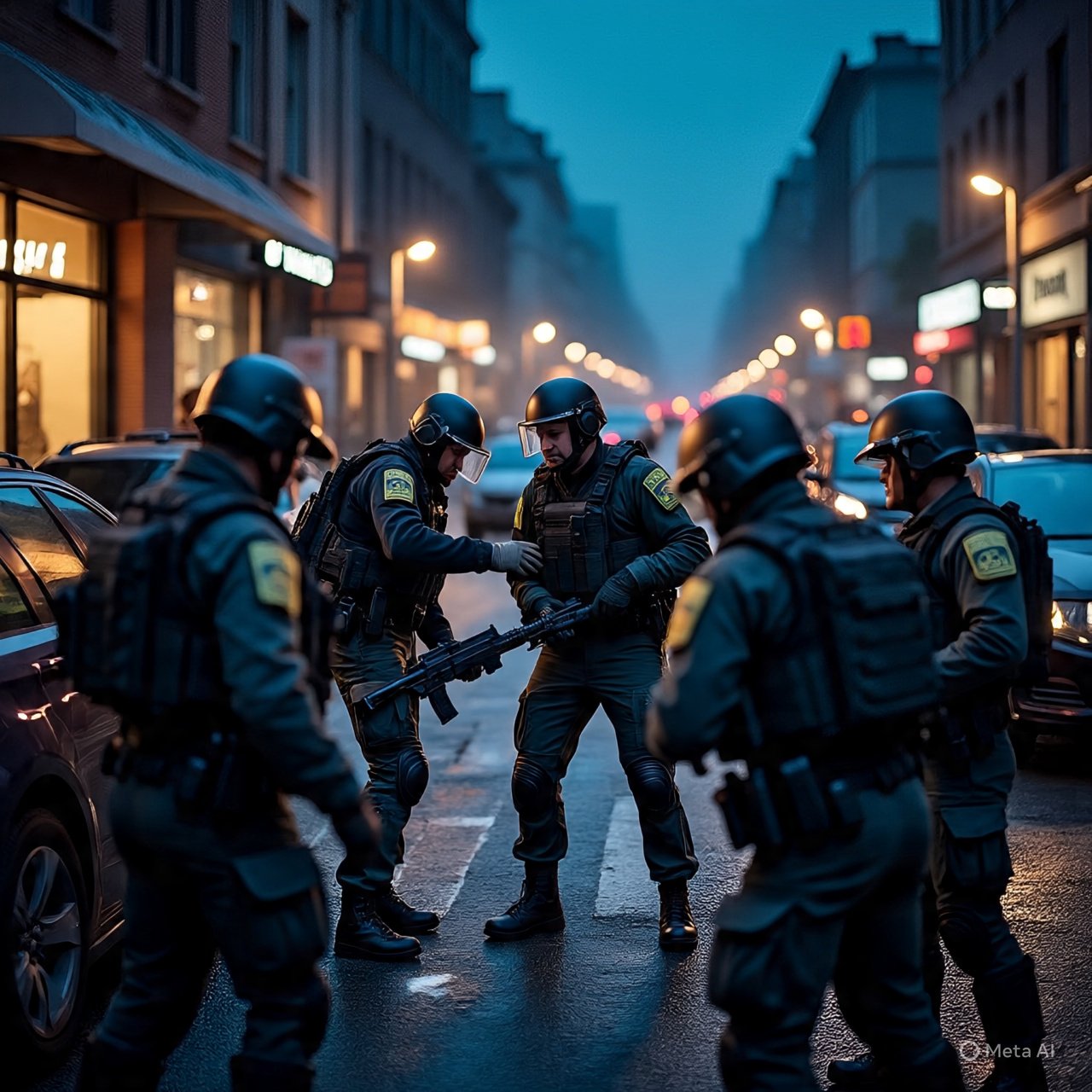
Killing of TTP commander Noor Wali in Kabul and destruction and capture of Afghan posts on Pak-Afghan border is a new norm set by Pakistan to protect its land and people by all means. It is a mixed, called “hybridity” approach to solve Pakistan’s Security Problems.
Lately, Pakistan’s military leadership have talked about how terrorism is becoming more dangerous, how tensions with Afghanistan are rising, and how India’s aggressive language is adding to the already tense security situation in South Asia. In recent statements, most of the attention was on Khyber Pakhtunkhwa (KP), where more than 10,115 intelligence-based operations (IBOs) have been carried out in 2025. In these operations 311 soldiers have embraced martyrdom and 970 terrorists were killed. The comments condemn bad leadership, political deals with terrorists, and outside causes including terrorism in Afghanistan and Indian support. This article utilizes a contemporary hybridity model derived from research on peacemaking in a multipolar context to elucidate this complex issue. This framework examines the interplay of various actors, power dynamics, and hybrid processes in Pakistan’s pursuit of security and peace, addressing the disintegration of the rules-based international order, the emergence of non-Western peace actors, the vestiges of the liberal peace, and the local turn. The analysis, based on official statements and other sources, shows that there is a mixed-use peacemaking environment where long-lasting global norms, local initiatives, and regional coalitions take the place of traditional Western-led operations. Breaking Down the Rules-Based International System that came up after World War I, which depended on multilateral institutions, is falling apart because of geopolitical tensions, countries not doing their part, and problems that cross borders, human trafficking, drugs smuggling, including climate change and terrorism are rising. Taliban regime in Afghanistan is giving terrorist groups like Tehreek-e-Taliban Pakistan (TTP) a safe place to hide. Not this only but India is supporting these groups for terrorist acts inside Pakistan. This breakdown shows itself in Pakistan as an insufficient reaction from international organisations to terrorism that crosses borders. The sudden US withdrawal from Afghanistan made the region even less stable since terrorists got their hands on advanced weapons that the US left behind in 2021. According to sources there were 756 terrorist attacks in the first half of 2025. There were 80 IED explosions and 5 suicide bombings. By May 2025, there had been almost 300 terrorist assaults in KP, or more than two attacks every day. There is still a lot of tension between Pakistan and Afghanistan. Kabul says that terrorists can’t hide in Afghanistan, while Islamabad says that terrorists from across the border violate Pakistan’s sovereignty. This shows how the world is becoming more divided and how terrorism is just one of the problems that will need more than simply collaboration between countries to tackle. The UN isn’t doing its job, as shown by the fact that there haven’t been any new peacekeeping missions since 2023 and the ones that are already going on are very underfunded. Pakistani security officials say that Indian leadership is making things worse by making “irresponsible and unwarranted provocative statements.” A lot of people are worried that leaders in India would say something that could start a war, and Pakistan has said that such a war would be “catastrophic.” As the world is more focused to solve their inner problems , Pakistan is looking for new ways to protect itself that don’t rely on conventional Western alliances in reaction to these kinds of tensions. Non-Western Peacekeepers: A New Force to Be Reckoned With As the West grows tired of “forever wars,” non-Western countries like Saudi Arabia, China, Qatar, and the UAE have stepped in to help settle disputes and make settlements between two countries when appropriate. The Strategic Mutual Defence Agreement (SMDA) between Saudi Arabia and Pakistan, which was signed on September 17, 2025, and ratified by the federal cabinet on October 9, 2025, is an example of this change. The agreement says that any attack on one party would be seen as an attack on both parties. Some ways that this collaboration works include through joint military exercises, sharing intelligence, and trading defensive technologies. Prime Minister Shehbaz Sharif called it a “historic milestone” that could bring in other Arab countries because of what is going on in Iran and Yemen right now. This agreement is in line with China’s help in 2023 in mediating discussions between Iran and Saudi Arabia and Qatar’s help in Afghanistan, just as prior non-Western peace efforts. Pakistan fights back against both Indian aggression and terrorist groups based in Afghanistan, like TTP and IS-K. Statistics show that Pakistan was the second-most-affected country by terrorism in 2025, with over 605 attacks in KP alone killing more than 516 people (312 troops, 72 police officers, and 132 civilians). Saudi Arabia and other non-Western countries help keep things stable by making “good enough coalitions” that don’t include Western ideas. China’s participation in trilateral counter-terrorism discussions with Pakistan and Afghanistan enhances the cohesion of these initiatives. What is left after the Liberal Peace Even while the liberal international order is falling apart, some parts of it, such state sovereignty, UN resolutions, and anti-terrorism measures, still exist. The UN Security Council says that Pakistan is using these leftovers in its diplomacy to promote Kashmiris’ right to self-determination and to push for a two-state solution for Palestine based on borders that were in place before 1967. Pakistan has reiterated the resolve by promising a “swift and decisive response” to India’s aggression. It is in response to provocative statements by Indian leadership. The Effect of the Change in the Region Even while the “local turn” stresses bottom-up leadership and solving problems based on the situation, communities are sometimes taken advantage of without being given more power. Military has criticised “governance gaps” and politicisation in KP, saying that although kinetic operations are moving forward, de-radicalization and judicial reforms are not. The local forces are taking the brunt of the rising violence, and “blood and sacrifices” are being shed because there are only 3,200 police personnel. The data has shown that there are problems with operations: Agencies fight for control, and terrorists can get away because of rules about who can be captured and delays in reinforcements. Critiques of PTI’s previous conciliatory strategy illustrate how elite capture obstructs the efficacy of the local transformation. Conversely, when local law enforcement agencies engage in military-civilian cooperation for flood relief and IBOs, hybrid characteristics arise. Progressive voices are trying to make stories that expose groups like PTM in order to help communities stop being radicalised. When bottom-up initiatives clash with top-down security priorities, the complexity of hybridity is highlighted by the dynamic interaction between local and national institutions. Hybridity as a Mechanism for Comprehending Multipolar Peacemaking. Pakistan’s security problems, such terrorism in KP, border threats from Afghanistan, provocations from India, and new collaboration with Saudi Arabia, show how different groups can work together to make peace. The new hybridity model shows how fragmentation makes people depend on regional pacts, how non-Western actors add to the West, how liberal remnants give people moral anchors, and how the local turn shows power asymmetries. “Entrenched conflicts” managed by pragmatic alliances characterise the results, as opposed to complete tranquilly or perpetual hostilities. This theory avoids Eurocentric biases by looking at how everyone is connected and how power works between them. It means that deals like the Saudi pact, which make the NAP more popular, could lead to long-term stability, which is excellent news for Pakistan. Hybrid methods offer a way out in a world where power is continually changing and there are many different centres of influence.
About the Author