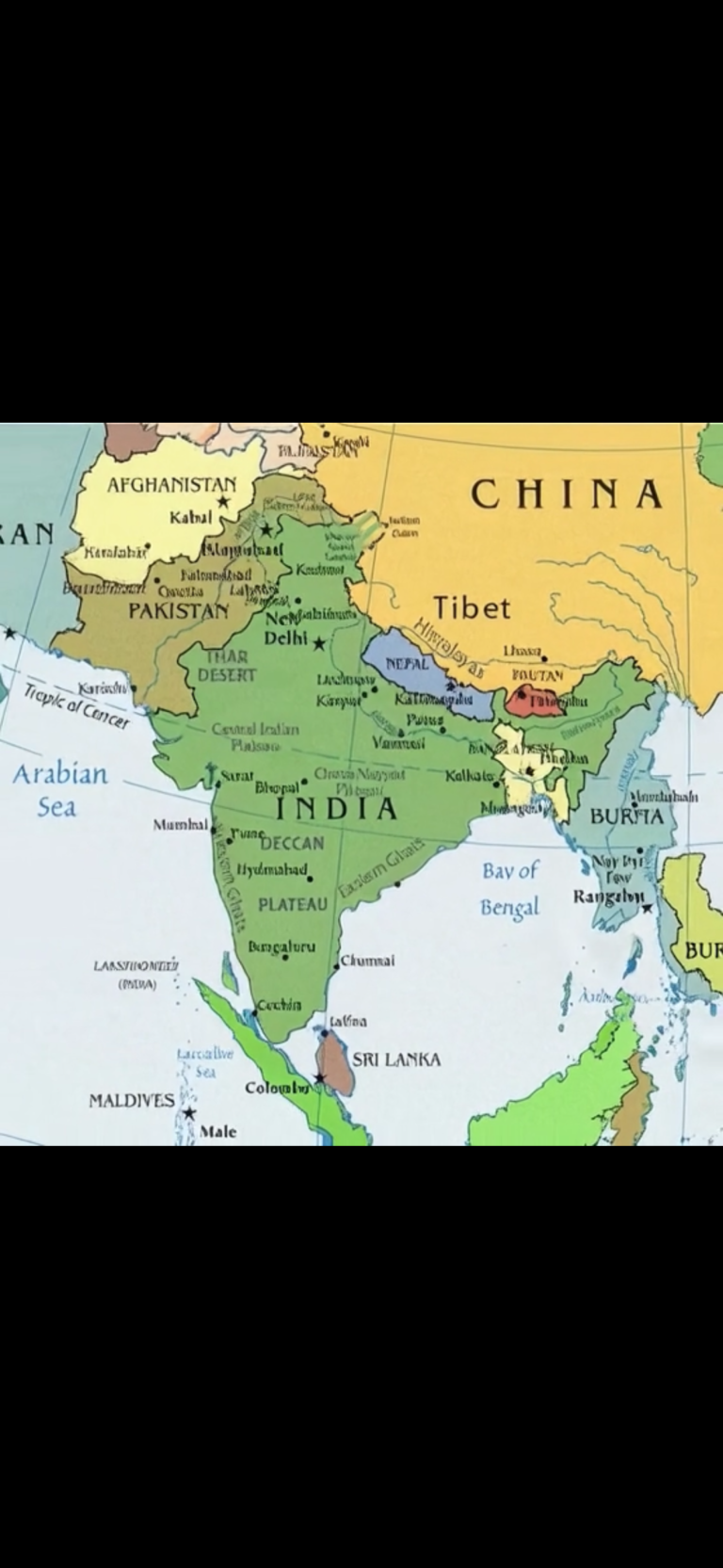


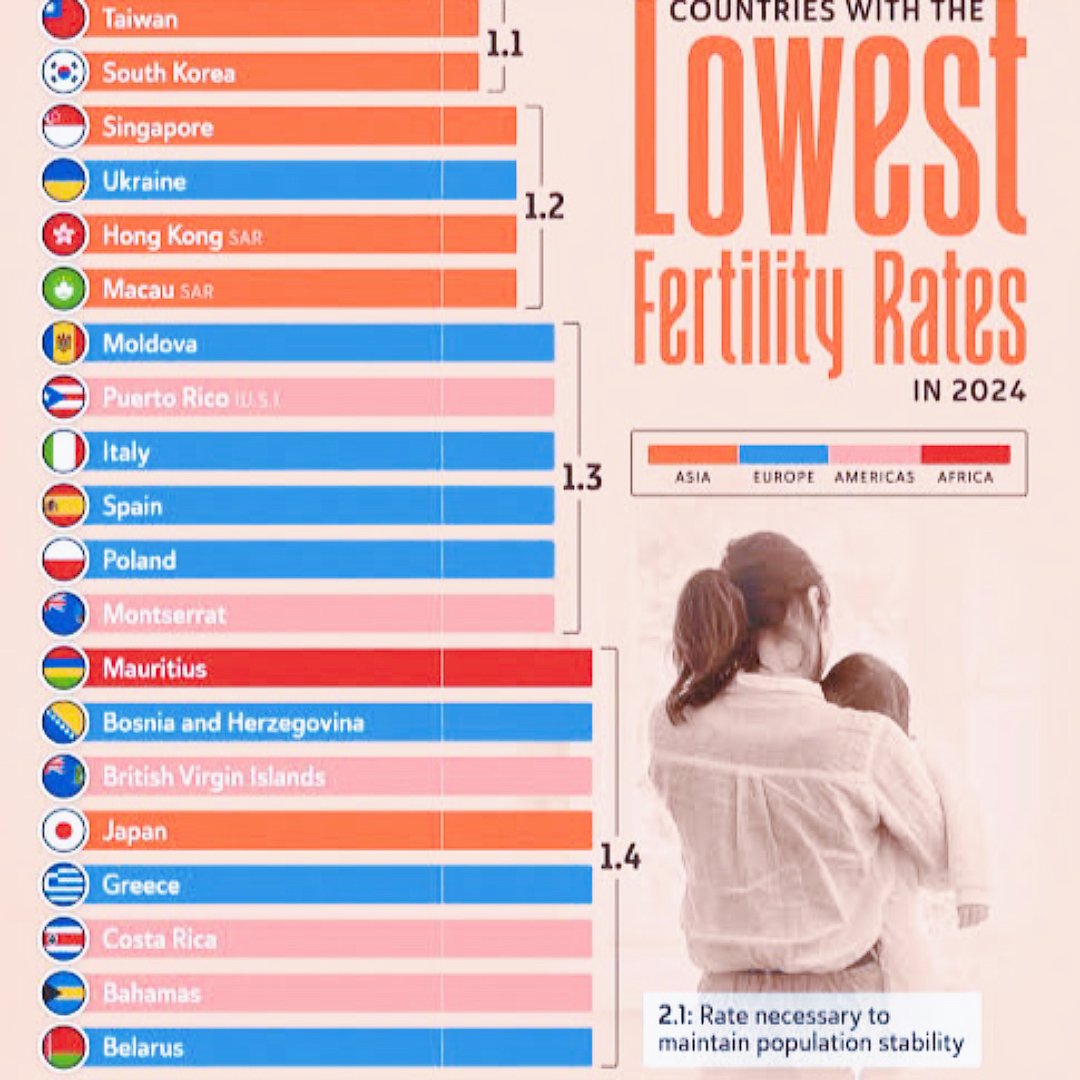
The world has already crossed a quiet line. One side is running out of kids, while the other half has too many. The effects are no longer just ideas; they are set in stone and will become worse every ten years. They will change power, money, culture, and even survival over the next hundred years. The demographic dividend is what caused this split: it’s when a country has a lot more working-age adults than kids or old people, which is an uncommon and short-lived economic boost. Savings go up, investment goes up, and growth speeds up, but only if education, jobs, and women’s participation are ready. If you miss the window, the same bulge will become a problem. The two most populous countries in history, China and India, are on opposing sides of that window. China has already cashed its dividend and used it. The one-child policy led to thirty years of exponential growth before it closed the door. Its birth rate is now between 1.0 and 1.1, which is one of the lowest rates ever. The number of people working reached its highest point in 2011 and is now dropping by millions every year. By the early 2030s, one out of every three Chinese people will be over 65. Factories in Guangdong already have trouble hiring people, pensions are going bankrupt, and the military is secretly raising the age at which people can join. The miracle that made China what it is today is ended, and the money is due. India, on the other hand, is at the open window. Its fertility has just dropped below replacement level at 1.9, but the drop came later and less severe, thus the country is still quite young—28 years old on average, with two-thirds of the population under 35. India will have the biggest and smartest workforce in the world during the next twenty years. If it can create jobs, get more women to work (because just 25% of women work), and keep educating girls, the benefits will be huge. It might contribute two full percentage points to annual per-capita growth until 2050 and make India the most important economic power of the century. If you fail, the same group of young people will cause trouble and waste their potential. The plot is easier to understand and more violent in other places. In the ultra-low-fertility belt, which includes South Korea, Japan, Taiwan, Italy, Spain, Greece, and most of Eastern Europe, the population is already starting to drop. By the 2040s, these nations will be very old, with 30–40 percent of people over 65 and not enough workers to replace them. Without 60–70 percent tax rates or outright default, pensions will be impossible. Whole areas will become deserted. In rural Japan, there are already villages where the youngest person is 70. Italian hill communities and Korean provincial cities will follow. Apartment buildings erected for young families in the 1990s will be mostly empty, and the playgrounds will be overgrown. There aren’t enough 18-year-olds remaining, therefore armies will raise the age for conscription to the late 30s. At the same time, sub-Saharan Africa is going through the biggest youth explosion in history. Forty to forty-five percent of its residents are younger than 15. Lagos, Kinshasa, and Dar es Salaam are all on course to become cities with 70 to 100 million people. This will be the biggest demographic dividend ever recorded if jobs and education become available. If they don’t, it will be the biggest group of unhappy, underemployed young men in history. The centre of economic power is already moving. Companies are moving their headquarters to Lagos, Nairobi, and São Paulo without making a big deal out of it so they may be closer to potential customers. By the 2060s, Africa and South Asia will have the biggest marketplaces, workforces, and militaries. Most of the new inventions, companies, and PhDs will come from towns that weren’t even on world maps in 2000. Migration will be the big release valve and the big political bomb. Countries with low birth rates will need tens of millions of young workers just to keep hospitals and factories running, but their older voters will fight against the very individuals who need to pay for their pensions. Within the next twenty years, the contradiction will break down every political system in Europe and East Asia. Language and culture will follow biology. By 2100, Japanese, Korean, Italian, Greek, and several Slavic languages will probably be minority or heritage languages in their respective countries. Swahili, Hausa, Yoruba, Amharic, and Hindi-Urdu will be the new languages of business, youth, and new ideas. English will still be a bridge, but the heart of world culture will go south. Climate change will hit the tropics the worst, where the population is rising the fastest and the water is running out. It will not affect the areas that are emptying out. The awful irony is that the oldest and richest societies will leave their weak shores behind because they don’t have enough people to protect them, while the youngest and poorest ones will have to make do for billions of years. The inversion will become clear sometime between 2075 and 2085. For the first time since farming was invented, the world’s median age will start to drop. The average person will be 27 years old, African or South Asian, and living in a city that didn’t exist 100 years ago. This is not the end of civilisation. It is succession. The cradle of mankind is going back to where it started, which is warmer, younger, louder, and much more crowded than anyone in 2025 can fathom.