

An Analysis
By Mohsin
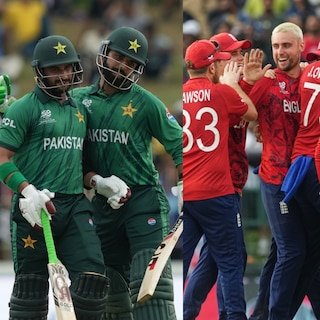
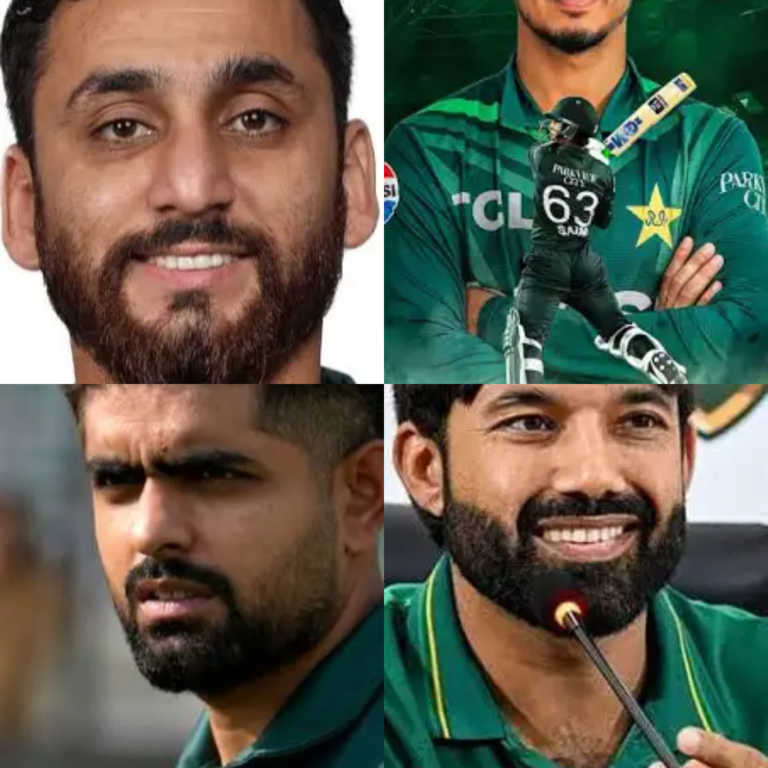
Islamabad ( February 25, 2026) Pakistan cricket has often swung between extremes from cautious accumulation to reckless aggression. In the latest T20 World Cup, the management’s apparent obsession with “power-hitting” and maximizing sixes has once again raised a critical question: did sidelining Babar Azam and Mohammad Rizwan actually solve a problem, or did it create a bigger one?
– *The Salman Agha Experiment at No. 3*
As skipper, Salman Agha’s returns at No. 3 read: 12, 1, 4, 38 & 5.
At first glance, the 38 looks respectable until you remove it (against Namibia), leaving 22 runs in 4 games. For a No. 3 batter arguably the backbone of a T20 innings that is simply not good enough at the World Cup stage.
What makes it ironic is that he replaced a player averaging 43 in T20Is at #3 with a strike rate of 126 numbers that reflect consistency and reliability over time.
In ICC events, stability at the top order often outweighs experimental aggression. Pakistan, however, chose disruption over continuity.
*The Powerplay Narrative: Saim Ayub’s Role*
Saim Ayub was marked as a power hitting opener to replace the traditional Babar Rizwan pairing. The idea was simple:
– Attack hard in the Powerplay
– Maximize fielding restrictions
– Increase six-hitting frequency
But after 67 matches, Saim Ayub’s strike rate stands at 136 with an average of around 21 with 10 ducks and 6 fifties; a below par stat in World Cricket.
If the benchmark for replacing two of Pakistan’s most successful openers was explosive dominance, the data does not overwhelmingly support the shift.
*Did Babar & Rizwan Really Misuse the Powerplay?*
The popular criticism was that Babar Azam and Mohammad Rizwan were “too slow” in the Powerplay. But historically, the pair:
Consistently provided:
– strong starts
– Preserved wickets
– built platforms for middle-order hitters
Their method wasn’t always flashy, but it was structured and calculated; that’s how Pakistan Cricket has been operating.
T20 cricket has evolved; yes. But evolution does not mean abandoning fundamentals. Teams like England and Australia attack hard, but they also retain players who anchor innings under pressure.
*The Cost of Obsession*
Pakistan’s shift seems driven by the optics of modern T20 cricket; sixes, strike rates, aggressive intent. But aggression without consistency becomes chaos.
Removing two proven performers in pursuit of theoretical explosiveness has so far resulted in:
– Fragile starts
– Unsettled batting order
– Increased pressure on middle order
– tactical confusion
In ICC tournaments, experimentation is a luxury few teams can afford.
The Bigger Question
Pakistan had and still has a batter who was recognized globally a decade ago: Babar Azam. Instead of building a system around his strengths, management attempted to reshape roles unnaturally.
When you sideline a player averaging 43 with a stable strike rate for the promise of faster scoring but the results do not significantly improve the decision demands scrutiny.
T20 cricket is not merely about sixes. It is about balance. It is about knowing when to accelerate and when to consolidate.
Pakistan’s obsession with power-hitting has come at the cost of stability. And as this World Cup campaign suggests, sidelining Babar and Rizwan has not delivered the transformation it promised. Babar & Rizwan were better choice specially in Asian conditions.
In the pursuit of speed, Pakistan appears to have sacrificed structure — and in a tournament of this magnitude, it is structure that wins championships, not merely so-called “intent” or an overloaded pack of so-called all-rounders.