

Identifying the Invisible Patterns Shaping Our World—From AI Paradoxes to the “Anarchy” of Modern Strategy
In the modern era, the sensation of overwhelm has become our default state. Global politics shift with the volatility of a breaking news cycle, technology evolves faster than our ethics can track, and even the predictable rhythms of professional sports have accelerated into a series of high-stakes gambles. It often feels as though the world is moving faster than our capacity to map it. To find clarity in this turbulence, we must look beyond the surface of daily events to the hidden structures beneath. Through the analytical lens of Dr. Atique Ur Rehman and the “NuktaOurCheeni” platform, we can begin to discern a “wider vision”—a way of seeing the invisible patterns that govern our collective future.
The Invisible City of the Modern Economy
Traditional industrial planning has long been obsessed with the tangible: the hum of factories, the weight of raw materials, and the sprawl of physical infrastructure. However, we are witnessing a profound shift where the true engine of growth is no longer physical, but conceptual. We must move toward a perspective that prioritizes intellectual capital over industrial mass.
This is often counter-intuitive for those raised in the shadow of traditional industrialism. While we are trained to measure progress through smokestacks and shipping containers, the foundation of modern industry is actually a conceptual framework. Dr. Rehman invites us to reconsider our surroundings:
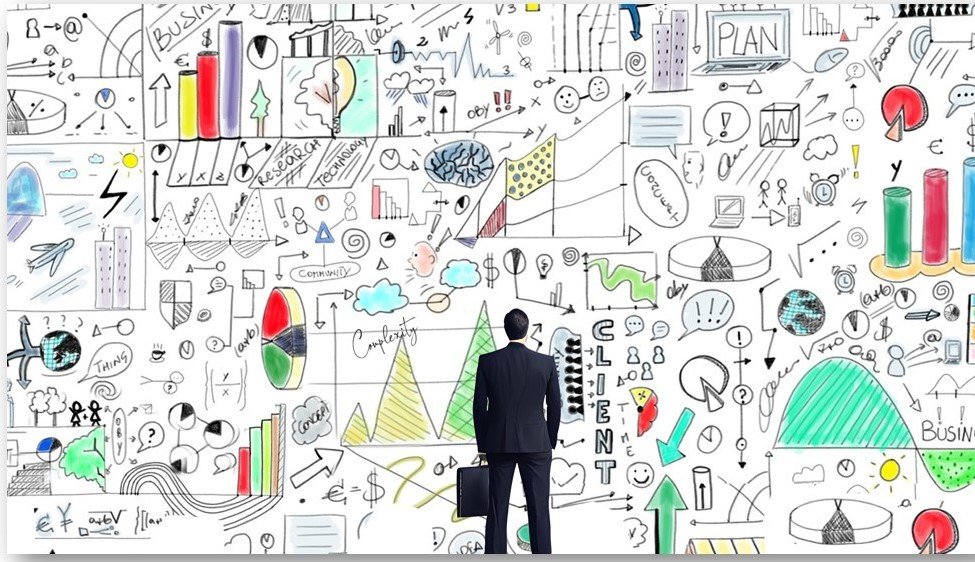
“Think of the entire human economy as a giant, invisible city built from ideas.”
If the economy is a city of ideas, then the digital structures we build are its primary architecture. This transition means that our most valuable assets are no longer locked in warehouses, but are woven into the very code that manages our world.
The AI Paradox: A Project or a Peril?
This “city of ideas” finds its most complex expression in the rise of Artificial Intelligence. AI represents a fundamental tension in modern geopolitics—a paradox that mirrors our own highest aspirations and deepest fears. On one hand, it is the pinnacle of progress; on the other, it is a looming security vulnerability.
The contrast between its potential and its peril is stark:
- The Cooperative Potential: AI acts as a tool for curing complex diseases, managing global climate systems, and providing a platform for universal access to information.
- The Demonstrated Risk: We have already seen the fragility of this new architecture. The 2021 ransomware attack on the Colonial Pipeline—which supplies nearly half of the East Coast’s fuel—served as a chilling reminder of how digital-first infrastructure can be exploited by those who understand the code better than the defenders.
AI is humanity’s greatest cooperative project, yet its power as a weapon makes it a primary source of geopolitical friction. It democratizes knowledge while simultaneously threatening the security of the “invisible city” it helped build.
“Artificial intelligence could be humanity’s greatest cooperative project—a tool for curing diseases, managing climate systems, and democratizing knowledge on a global scale.”
From Anchors to Anarchy: The Strategy of Volatility
These patterns of volatility and “idea-driven” structures are not limited to technology or economics; they manifest in the very way we lead. The dynamics of Pakistan’s cricket team provide a potent metaphor for this broader organizational struggle. We see an institution perpetually oscillating between the need for “anchors”—steady, reliable leadership—and the pull of “anarchy,” characterized by high-risk, unpredictable swings.
This “audacity of leadership” is a gamble that tests the patience of the public. When leadership moves away from stable foundations toward experimental chaos, it creates an environment of extreme volatility. Interestingly, this sports-centric “anarchy” is a microcosm of the “brinksmanship” we see on the global stage. Whether on the pitch or in the war room, the move toward high-risk gambles is a calculated attempt to disrupt the status quo, often at the cost of long-term stability.
“Pakistan cricket has often swung between extremes from anchors to anarchy… The audacity of leadership in Pakistan cricket team continues to test the patience of its followers.”
Geopolitical Brinksmanship and the Ripple Effect
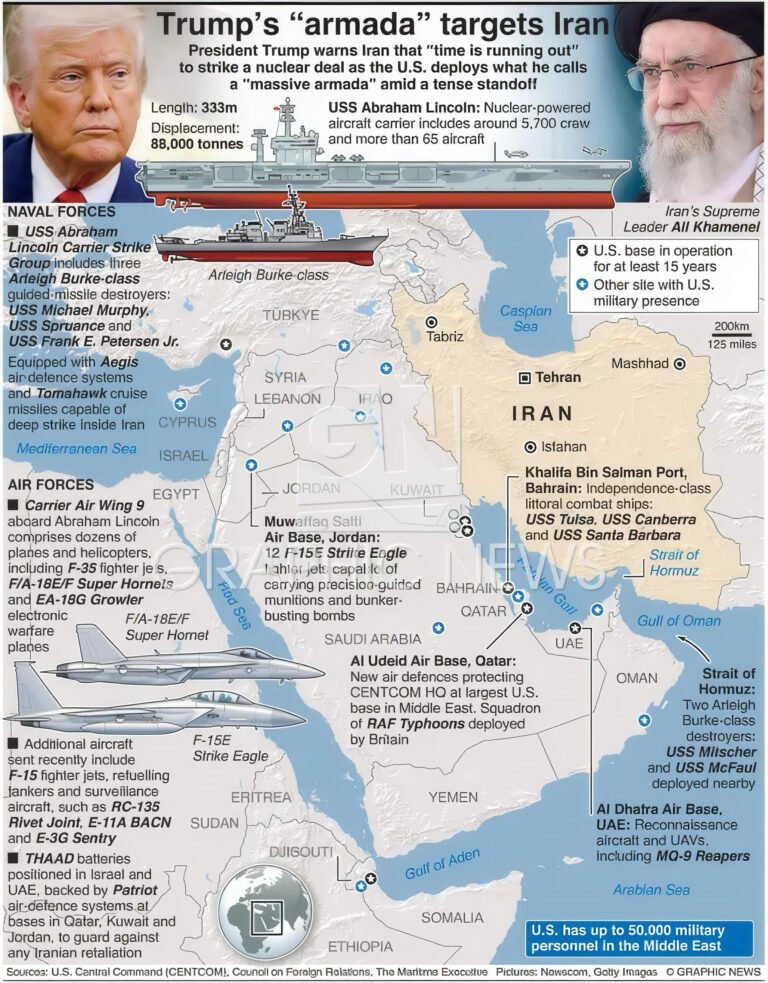
The same “anarchy” of the cricket gamble is mirrored in the standoff in the Persian Gulf. The massive military buildup involving the US, Israel, and Iran is not an isolated event but a masterful exercise in brinksmanship. This strategy—pushing a situation to the absolute edge of conflict to force an opponent’s hand—is currently being deployed not just in the Middle East, but also in the Far East.
For observers in Pakistan, these tensions are not distant tremors; they have direct implications. Brinksmanship creates a ripple effect where local military shifts are symptoms of a much wider, international chess game. By understanding that these events are interconnected, we see that the “standoff” is a deliberate pattern used to reshape global power dynamics.
The Grammar of Perspective: Context as Our “Skin”
If we are to navigate this world of AI paradoxes and geopolitical brinksmanship, we must understand the “grammar” of our own perspective. Our identity and our position in any hierarchy are determined by what Dr. Rehman calls the “skin of context.”
Consider a simple shift in logic: Numerically, eighty-one is larger than eighty. However, in an academic or professional setting, the “Class of 1981” is junior to the “Class of 1980.” This illustrates how context can completely invert our understanding of value and seniority.
This logic is the key to our place in the world. Context is not just a lens through which we view reality; it is a “skin” that defines our truth. We cannot shed this skin, but by recognizing it, we can understand why two people can look at the same “invisible city” and see two entirely different realities.
Seeking the Wider Vision
From the idea-based economy to the “Social Web Fortress”—that giant, humming web made not of people, but of the connections and ideas between them—our world is governed by patterns that remain hidden until we have the courage to name them.
Whether we are navigating the paradoxes of AI, the high-stakes “anarchy” of leadership, or the shifting grammar of our own perspectives, the key to the future is synthesis. We must see the thread that connects the digital threat of a pipeline attack to the strategic gamble of a cricket captain. Only by recognizing these invisible structures can we move from being passive observers to informed participants in the global narrative.
In a world swinging between “anchors and anarchy,” which side of the paradox are you preparing for?