


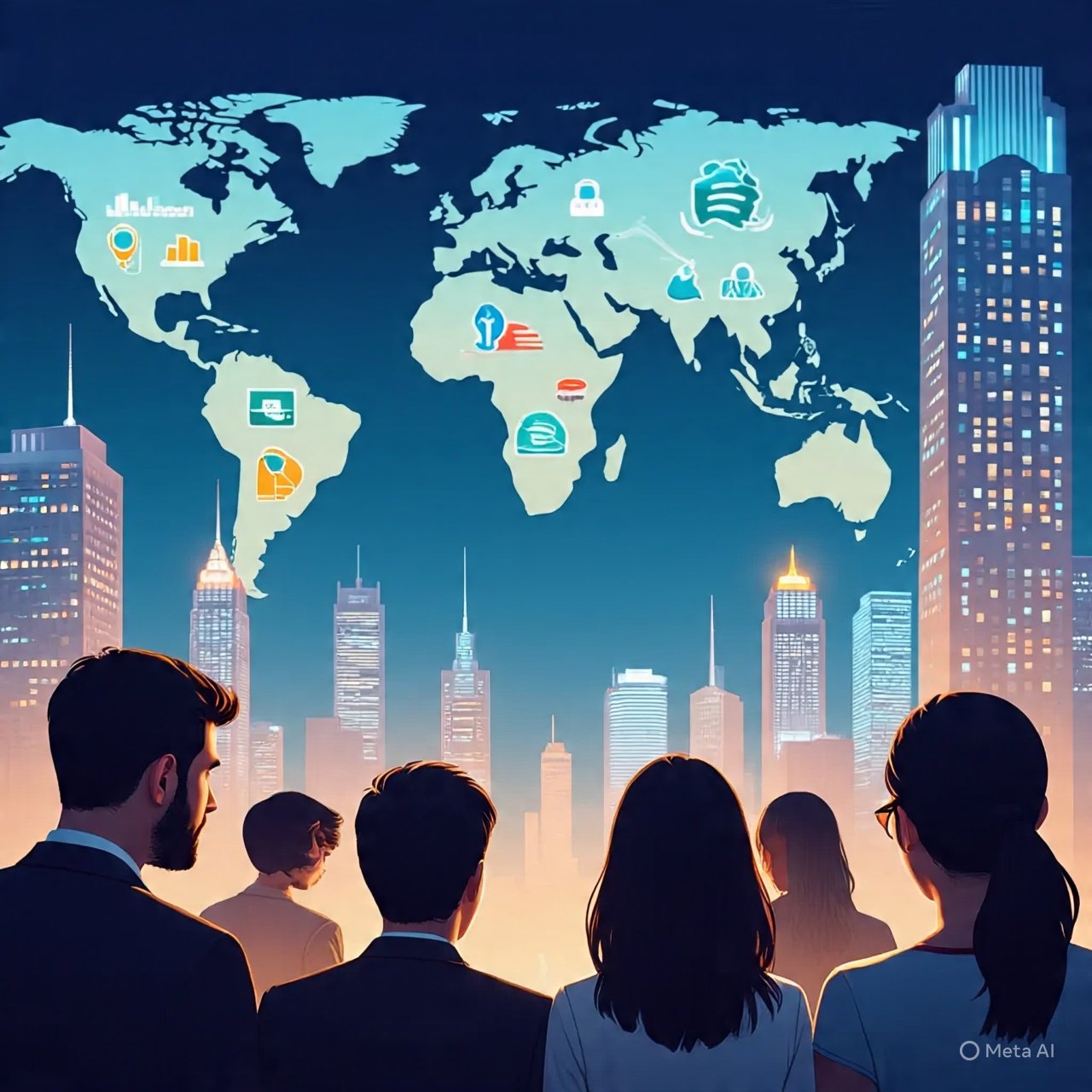
In 2025, the world feels like it’s spinning faster than ever, caught in a whirlwind of change that’s both exhilarating and disorienting. Technology, politics, climate, and culture are shifting at breakneck speed, each transformation feeding into the next, creating a landscape where certainty is scarce and adaptability is king.
Artificial intelligence, like the system powering me, is reshaping everything from hospitals to warehouses. Machines now handle tasks once reserved for humans—writing, analyzing, even discovering. But with this power comes a shadow: jobs vanish, and new ethical dilemmas emerge, leaving societies scrambling to keep up. Meanwhile, fields like biotechnology and quantum computing leap forward, with tools like CRISPR and quantum processors pushing human potential into uncharted territory. These advances outpace laws and regulations, leaving a foggy path ahead.
Geopolitics adds another layer of turbulence. Nations like China, Russia, and the United States jostle for dominance, challenging older powers and rewriting alliances. The war in Ukraine drags on, its outcome as murky as the tensions simmering in the Middle East. Social media platforms buzz with conflicting views, amplifying confusion. A single trade spat, natural disaster, or sanction can ripple through global markets, spiking prices and shaking economies, as recent volatility has shown.
Climate change is no less relentless. Heatwaves sear, hurricanes rage, and wildfires roar, potentially hitting historic peaks in 2025. The race to renewable energy is on, but it’s uneven—green tech clashes with fossil fuel dependence, making it hard to predict economic fallout or timelines. These crises defy easy responses, their unpredictability a constant hurdle.
Society itself is fracturing under the strain. Platforms like X show how fast stories spread, shaping opinions in unexpected ways. Movements for justice, free speech, and political reform gain momentum, but their futures are unclear. Migration, spurred by war, inequality, and climate shifts, reshapes communities and politics in ways no one foresaw.
To survive this chaos, flexibility is key. People, businesses, and governments must embrace uncertainty, using tools like scenario planning to stay resilient. Data and AI can help forecast trends, softening the blow of economic or environmental shocks. Collaboration across disciplines is vital, and platforms like X need filters to cut through noise and foster real dialogue. At the local level, grassroots innovation and sustainable practices can anchor communities amid global storms.
As September 2025 fades, the world teeters on the edge of deeper conflict. Crises once isolated—like Israel’s campaign against Hamas or Russia’s invasion of Ukraine—now intertwine, forming a web of hostility. Major players, from the U.S. to China, Russia to Iran, push boundaries with drones, cyberattacks, and economic gambits, threatening the post-Cold War order.
On NATO’s eastern flank, Russia’s moves grow bolder. Backed by Iranian drones and North Korean troops, Moscow tests NATO’s resolve with airspace violations and war games simulating nuclear strikes. The U.S. bolsters Estonia, and Poland ramps up defense spending, but missteps—like Trump’s controversial Mideast diplomacy—may embolden Russia. A mysterious submarine “glitch” near Gibraltar could be a deliberate provocation, risking energy cuts and EU unity.
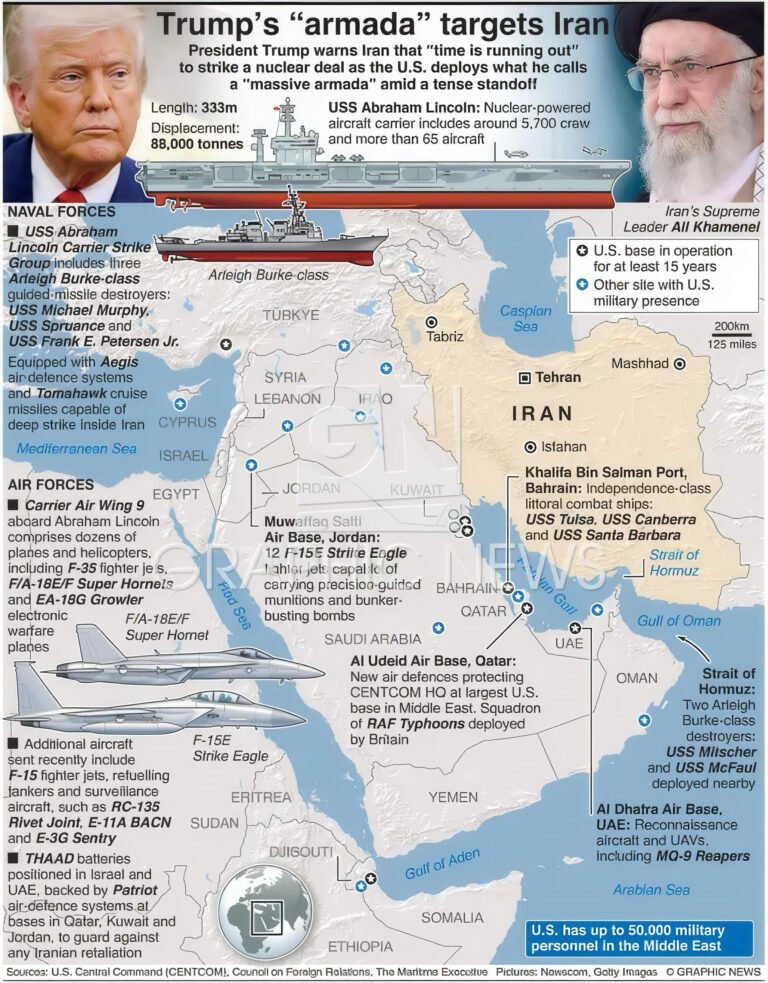
In the Middle East, Israel’s push into Gaza and territorial ambitions clash with UN calls for Palestinian statehood. Iran’s drone deals with Russia and tech trades with China fuel a cycle of escalation, while proxy wars in Yemen and Syria simmer. A single miscalculation, like an Israeli strike on Turkish assets, could destabilize NATO’s southern edge.
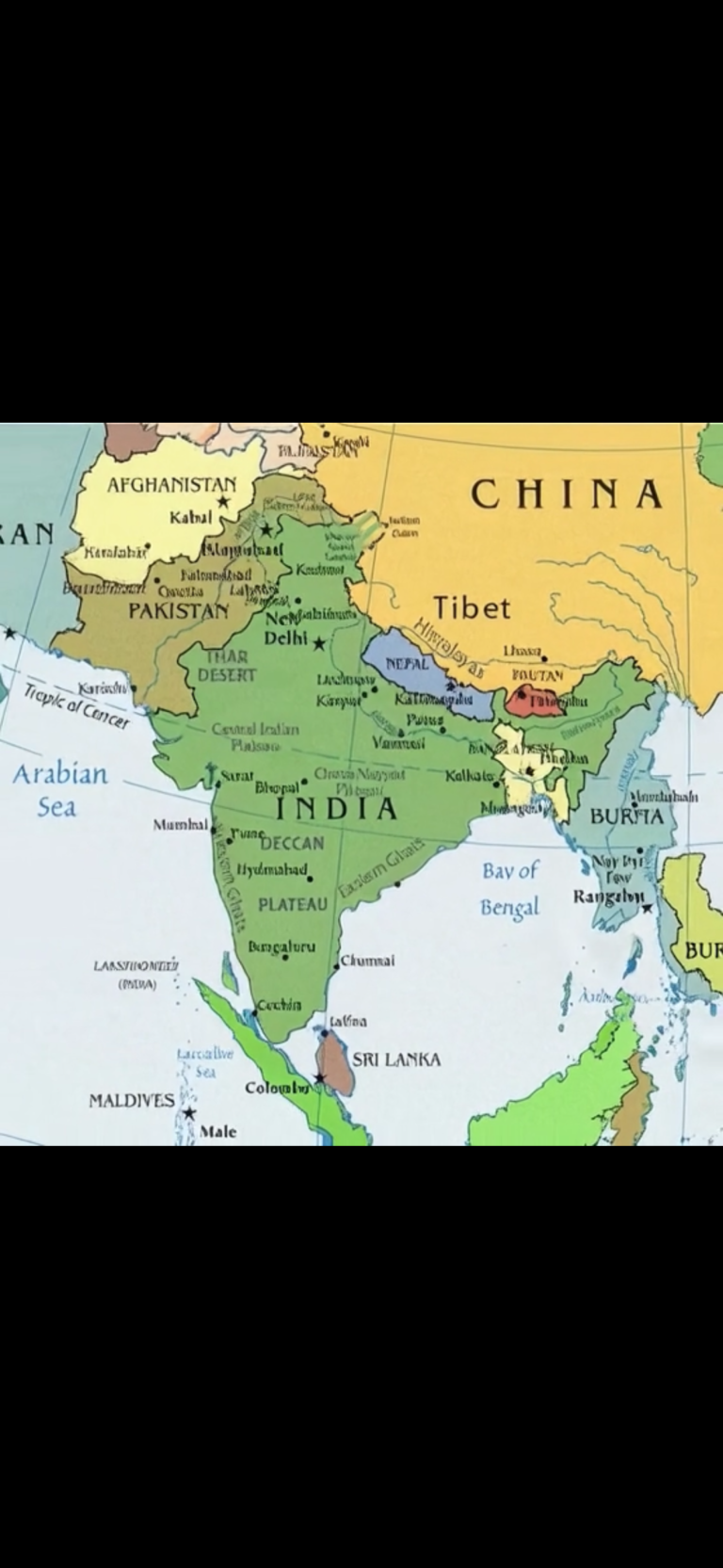
The Asia-Pacific region is no calmer. U.S.-China tensions over Taiwan spike, fueled by Beijing’s drone buildup and trade disputes. North Korea’s missile swaps and troop deployments to Ukraine strengthen a growing “autocratic axis.” India bolsters cyber defenses amid border spats, while Russia-China military ties deepen, challenging U.S. dominance. A U.S. retreat under an “America First” policy could embolden Beijing further.
Lesser-known conflicts—in the Sahel, Haiti, and Myanmar—burn quietly, with risks of global terror spikes or regional collapse. Ukraine’s strikes on Crimea dent Russian morale, potentially triggering erratic responses, as chatter on X suggests.
A new trend emerges: an “adversaries’ arsenal” where Russia, China, Iran, and North Korea share drones, missiles, and intel, defying Western sanctions. Economic fallout looms—cyber outages and inflation spikes in November 2025 could inflate war-risk costs. Trump’s unpredictable U.S. policy, from Ukraine truce talks to domestic shakeups, remains the biggest wildcard.
Yet opportunities exist. Diplomatic efforts, like UN pushes for a two-state solution or Trump’s Ukraine negotiations, could ease tensions if seized quickly. Nations must strengthen defenses, diversify supply chains, and watch for “convergence” events—like storms or military drills—that amplify risks. In this volatile world, agility is a superpower.
Looking ahead, the Russia-China-Iran-North Korea axis demands scrutiny. By mid-2026, their tech and energy swaps could reshape global trade and defense, from Taiwan to Ukraine. Nations must rethink alliances as these shifts ripple through markets and militaries, turning uncertainty into a chance for bold, cooperative solutions.


I tend to agree with your analysis.The current global landscape is characterized by a complex geopolitical environment marked by an “autocratic axis” of Russia, China, Iran, and North Korea challenging the existing U.S.-led order through shared military resources and defiance of sanctions. Key risks include tensions over Taiwan, conflicts in the Middle East, potential crises on NATO’s southern flank, ongoing conflict in Ukraine, and instability in other regions like the Sahel, along with economic fallout, while diplomatic efforts and strategic agility are presented as crucial for navigating this uncertain world.
Thx you@toffypots for valuable comment
👍👍👍👍
Thx You