

In an age where borders are porous to ideas, capital, and tourists long before they are to armies, a nation’s image has become one of its most precious strategic assets. What the world thinks of a country—its culture, its governance, its safety, its openness—now determines, more than ever before, whether planes land filled with investors and backpackers or whether they simply fly over. Pakistan, a country of 240 million people, breathtaking geography, and ancient civilisations, finds itself trapped in one of the most persistently negative international perceptions of any state in the modern era. Labelled alternately as the “most dangerous country in the world”, a nuclear flashpoint, a sponsor of terror, or a failing experiment in Muslim democracy, Pakistan has paid an enormous price for this artificially made image: collapsed tourism, frightened investors, suspended cricket tours, and a diplomacy that begins every conversation on the defensive.
This is not merely a public-relations misfortune. It is a strategic emergency.
The year 2013 should have been a turning point. For the first time in Pakistan’s turbulent history, one elected civilian government handed power to another after completing a full five-year term. The Pakistan People’s Party government of 2008–2013, despite its many flaws, achieved what no previous civilian administration had: it left office at the scheduled end of its tenure rather than at the barrel of a tank. In any other country, this would have been celebrated as the quiet consolidation of democracy. In Pakistan, it passed almost unnoticed abroad, drowned out by the louder, older narrative of bombs, generals, and bearded fanatics. The historic democratic transition of 2013 was a golden opportunity to begin rewriting the global script about Pakistan. It was, tragically, squandered.
Perception, in the interconnected 21st century, is policy. Investors do not read the fine print of National Action Plans; they read headlines. Tourists do not consult the Stockholm International Peace Research Institute; they consult TripAdvisor and travel advisories. Diplomats do not begin with potential; they begin with reputation. When the reputation is that of a country perpetually on the brink, opportunities evaporate long before proposals reach boardrooms in London, Dubai, or Beijing.
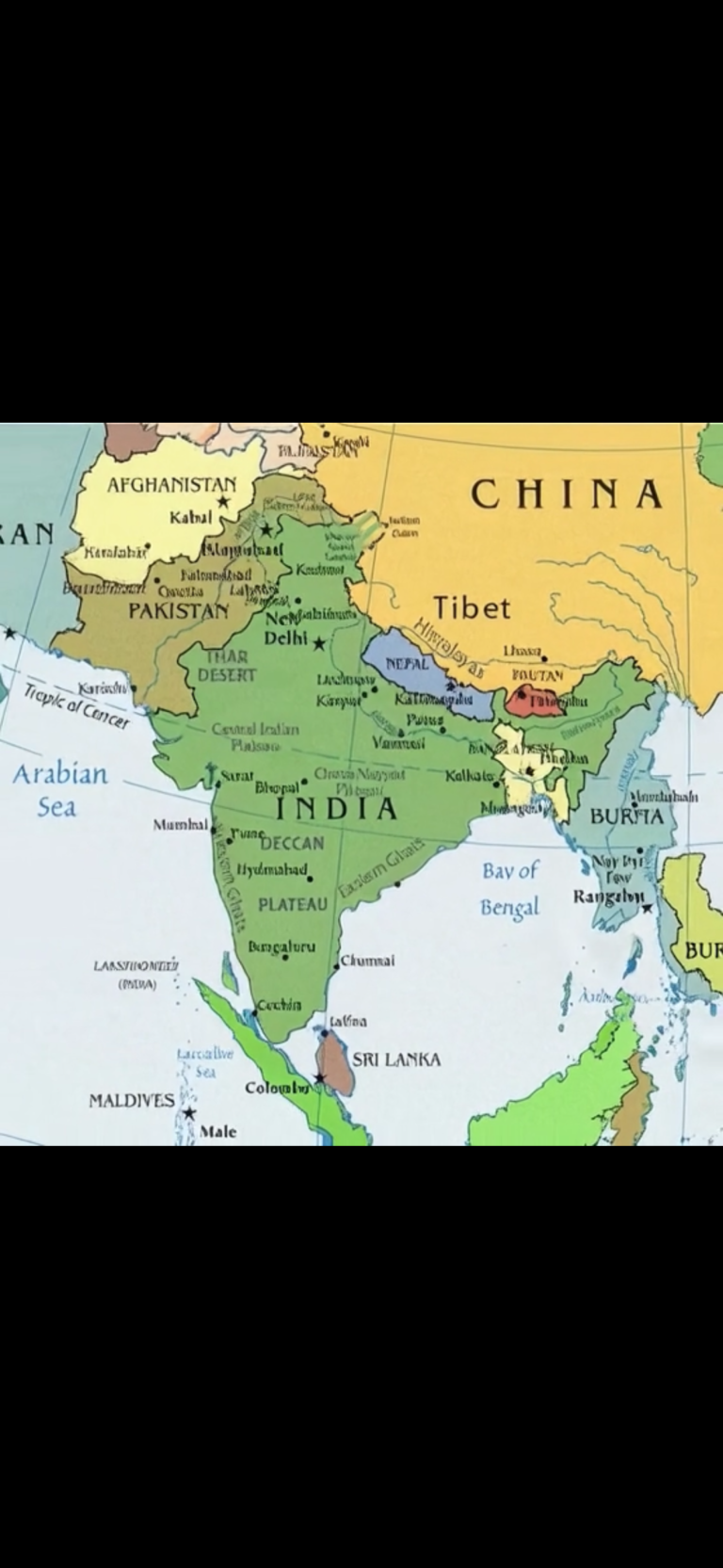
Compare Pakistan’s image with its neighbours, and one sees the brutal hierarchy of perception in developing Asia. India is seen as chaotic and poor but also democratic, spiritually rich, and economically ascending. Bangladesh is poor and flood-prone but hard-working and moderate. Sri Lanka spent decades associated with civil war yet is now rebranding itself successfully as a peaceful island paradise. Pakistan alone carries the compound stigma of terrorism and chronic political instability—a cocktail almost custom-designed to repel the very forces (capital, talent, tourism, goodwill) that every developing nation courts.
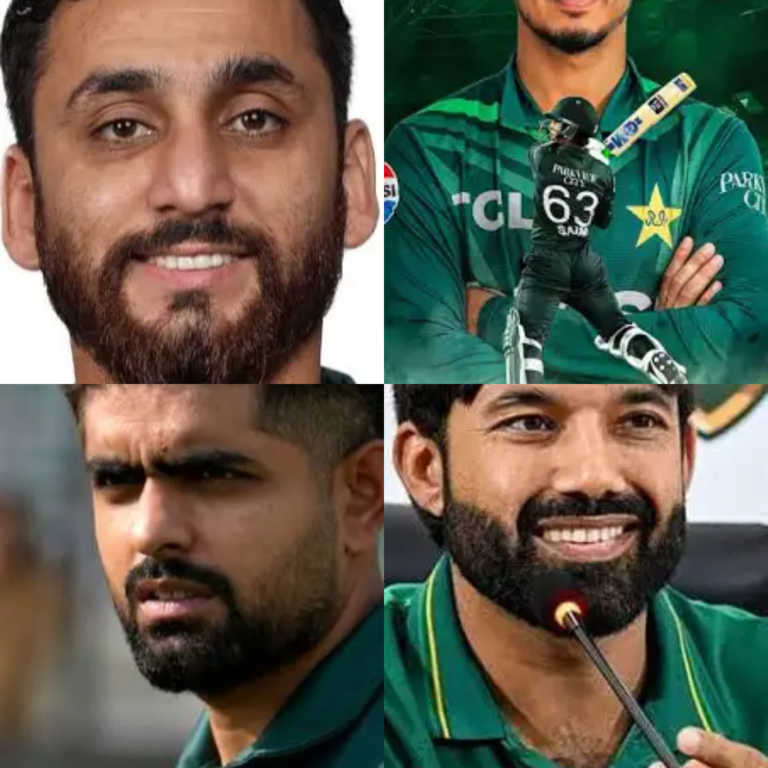
The consequences have been measurable and merciless. Foreign direct investment, which peaked at $5.4 billion in 2007–08, collapsed to under $1 billion in several subsequent years. International cricket, once a regular feature of life in Lahore and Karachi, vanished for a decade after the 2009 attack on the Sri Lankan team. The northern tourist valleys that once drew climbers and hippies from across Europe became ghost trails. The WHO’s 2014 decision to make polio vaccination certificates mandatory for all departing Pakistanis—an indignity shared only with war-torn Afghanistan—became a global symbol of backwardness.
Much of this damage is self-inflicted. Four direct military coups, decades of cumulative dictatorship, and catastrophic failure to contain violent extremism for most of the 2000s created realities that no public-relations campaign could wish away. Yet reality and perception are not the same. Travellers who have actually visited Pakistan in recent years—YouTubers, diplomats on escorted trips, adventurous backpackers—almost uniformly report the same astonished refrain: “It’s nothing like we were told.” The hospitality is overwhelming, large parts of the country are peaceful, the landscapes are world-class, and ordinary Pakistanis are desperate for the world to see them differently. The gap between the lived Pakistan and the imagined Pakistan has rarely been wider.
The scholarly consensus is remarkably consistent. From security analysts to communication specialists, researchers agree that terrorism, fragile democracy, sensationalist media, and the collapse of cultural soft-power tools have combined to create a vicious cycle: internal crises damage the image, the damaged image deepens the crises by starving the country of resources and goodwill, and the spiral continues.
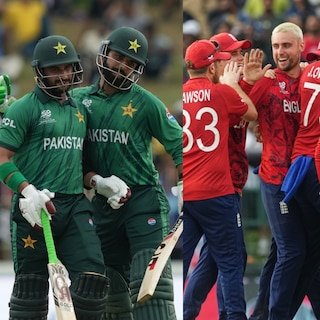
Liberalism, the dominant operating system of the contemporary world, offers both diagnosis and prescription. In a globalised order built on trade, travel, and trust, states are rewarded or punished not primarily for their missiles but for their ability to reassure mobile capital, skilled migrants, and curious tourists that they are stable, open, rights-respecting, and worth engaging. Democracies attract more investment than dictatorships. Countries that educate their girls outpace those that do not. Nations that can host a cricket World Cup final earn more soft power than those that cannot protect a visiting team. The European Union, ASEAN, the very structure of the WTO and IMF—all rest on the assumption that cooperation, transparency, and human development pay higher dividends than coercion or closure.
Seen through this liberal lens, Pakistan’s image crisis is not bad luck; it is the predictable consequence of decades spent defying the incentives of the current world order. Repeated military rule signalled contempt for the global preference for democracy. The long failure to crush domestic terrorism signalled incompetence or worse. The continued marginalisation of women and minorities signalled medievalism. The sensationalist media signalled chaos. Each of these choices carried a cost in perception, and perception, in turn, carried a cost in cold, hard cash and influence.
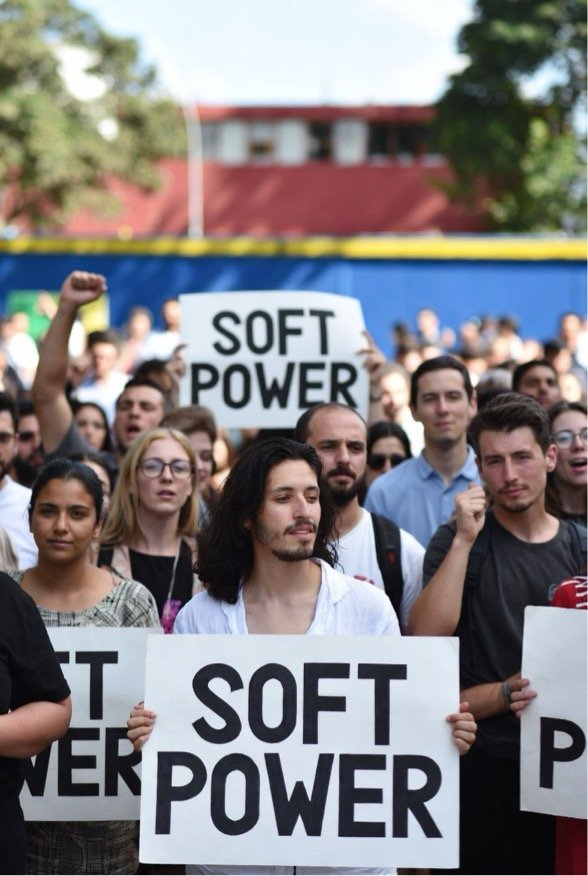
Yet the same liberal framework that explains the punishment also illuminates the path out. Soft power—the ability to attract and persuade rather than coerce—is the practical application of liberal principles on the world stage. Joseph Nye’s original formulation (culture, political values, and foreign policy) has been expanded by the Portland Soft Power to include education, enterprise, digital connectivity, culture, governance, and engagement. Pakistan scores dismally on nearly all these metrics not because it lacks the raw material but because it has failed to weaponise what it has.
It possesses five of the world’s fourteen highest peaks, the archaeological treasures of Taxila and Mohenjo-Daro, Sufi shrines that draw millions of pilgrims, a young population hungry for education and modernity, and a diaspora of millions who have succeeded from Silicon Valley to the City of London. It has produced Nobel laureates, world-class sports goods, Oscar-winning documentaries, and animated films that delight children across borders. Since 2014, military operations and the National Action Plan have reduced terrorist violence by over 90 per cent—a success story few countries can match, yet one that is barely whispered abroad.
The ingredients for a dramatic image turnaround are present. What has been missing is strategy, coordination, and political will sustained beyond the five-year electoral cycle.
The prescriptions are neither mysterious nor cheap, but they are straightforward. First, protect and deepen democracy. Nothing would do more for Pakistan’s image than a consecutive peaceful transition of power. Investors and governments notice patterns, not single events. Second, revive cultural industries. A funded, professional film and television sector telling Pakistani stories—about war heroes, scientists, Sufi poets, mountains, and ordinary resilience—would do more than a hundred diplomatic receptions. Third, launch an aggressive tourism campaign backed by infrastructure, visa reform, and security guarantees. Nepal, with far fewer resources, earns billions from mountaineers; Pakistan could do the same and more. Fourth, reform the media ecology. Sensationalism pays in the short term but bankrupts the nation in the long term. Incentives—tax breaks, training, rating reforms—can shift coverage toward nation-building without compromising freedom. Fifth, celebrate minority and women’s rights not as concessions to the West but as advertisements to the world that Pakistan belongs to the 21st century. The opening of the Kartarpur Corridor was a masterstroke of soft power; it must be the rule, not the exception.
Recent years have offered glimmers of hope. Four consecutive elected governments (2008–2025), the sharp decline in terrorism, the China-Pakistan Economic Corridor, and the revival of international cricket and cinema—all are data points in a new narrative struggling to be born. Public opinion surveys show overwhelming Pakistani support for precisely these soft-power measures: more cultural promotion, less yellow journalism, aggressive tourism development, and celebration of scientists and humanitarians rather than only generals and clerics.
Pakistan stands at a crossroads more consequential than any battlefield. It can continue muddling along with a toxic global image, forever explaining itself, forever on the back foot. Or it can make a very deliberate, very patient, over a generation—turn itself into a country that no longer needs to explain, because the world already wants to visit, invest in, study, and befriend it.
The tools are known. The liberal global order is remarkably forgiving of countries that genuinely change. Japan and Germany rose from utter ruin by embracing economic diplomacy and cultural openness. South Korea turned military dictatorship into K-pop and Samsung. Even Saudi Arabia, long the epitome of conservative closure, has understood that concerts and cinemas are strategic assets in 2025.
Pakistan need not copy anyone. It has its own history, geography, and soul to offer. What it requires is the political imagination to see image not as vanity but as survival, and the discipline to pursue soft power with the same single-mindedness it once reserved for hard power.
The 2013 democratic milestone was a door cracked open. It is still possible to push it wide. The alternative is to remain the country the world flies over rather than lands in—a tragedy for a nation that has so much to give and so much to gain from being seen clearly and, finally, for what it truly is.