

Screenshot
In the electric glow of smartphone screens, where a single post can ignite a movement and a 90-second clip can topple a dynasty, Zohran Kwame Mamdani’s victory in the 2025 New York City mayoral race became more than a political upset—it was a digital revolution. On November 4, 2025, the 34-year-old Queens assemblyman, a democratic socialist and the city’s first Muslim, South Asian, and African-born mayor, defeated former Governor Andrew Cuomo with 50.3% of the vote in a record turnout of over 2 million ballots—the highest for a mayoral race since 1969. But the real story wasn’t just the numbers. It was the surge: Mamdani’s X account, hovering between 900,000 and 970,000 followers before election night, exploded past 1 million within hours of victory and reached 1,019,956 by the morning of November 6—a gain of 50,000 to 120,000 followers in under 48 hours. This wasn’t luck. It was strategy. It was authenticity. It was the future of elections.
Mamdani didn’t win with money. He won with momentum. While Cuomo and his billionaire allies—figures like Bill Ackman and Jamie Dimon—poured over $100 million into attack ads and super PACs, Mamdani raised $20 million the old-new way: small donations, viral videos, and relentless online organising. His campaign became a social media machine, churning out short, vertical, high-energy clips optimised for X, TikTok, and Instagram. A June primary video declaring “Our time has come” racked up 10 million views. Election Day threads showed volunteers knocking on over 3 million doors—far beyond the initial goal of 1 million. Each post linked to zohranfornyc.com/gotv or findmypollsite.vote.nyc, turning passive scrollers into active voters.
His audience? Young people. First-timers. The disaffected. With 60% youth turnout, Mamdani didn’t just speak to Gen Z—he spoke their language. Upbeat remixes, quick cuts, subtitles for accessibility, and unapologetic policy pitches: freeze rents, make buses free, and tax the 1% to fund universal childcare and green jobs. His immigrant journey—from Uganda to Astoria—became a recurring motif, humanising a platform that scared Wall Street but energised working-class neighbourhoods. Endorsements from Bernie Sanders and Alexandria Ocasio-Cortez amplified the signal. Even his wife’s Instagram surged past 200,000 followers, creating a family-branded digital ecosystem.
And then came the victory post.
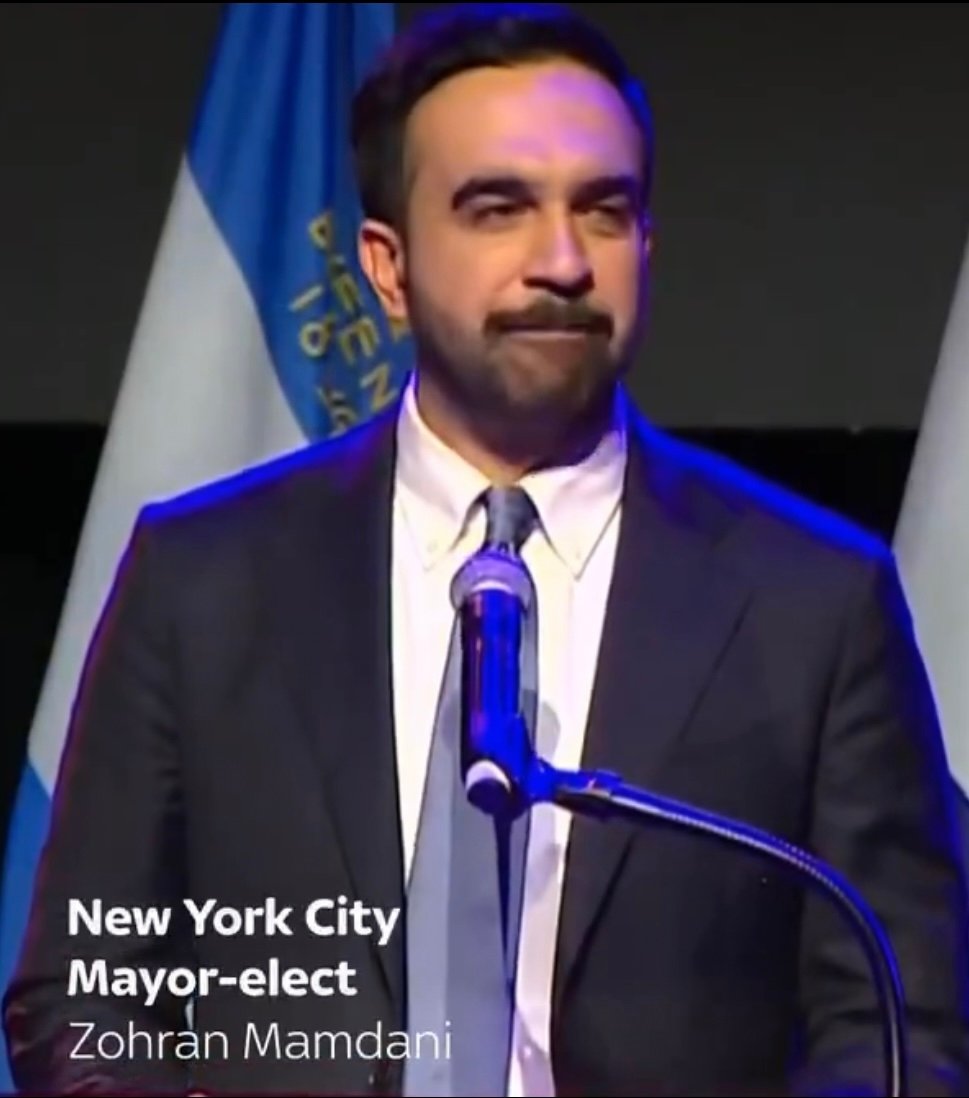
Posted on November 5 at 2:39 PM GMT, just hours after major networks projected his win, the 85-second clip from his Brooklyn Paramount speech became a cultural artefact. Before a roaring crowd of 2,000—union workers, young progressives, immigrants—Mamdani stood in a navy suit, voice rising: “We have toppled a political dynasty… Let tonight be the final time I utter Andrew Cuomo’s name.” He refused to dilute his identity: “I will not change who I am, the faith that I am proud to belong to.” He stared down power: “Your billionaire friends may have lost New York, but the people won.” The overlay text was simple: “Thank you, New York City. Together we made history. Now let’s get to work.” A link led to transition2025.com.
Within 24 hours, it had 435,000 likes, 65,000 reposts, 16.7 million views, and over 8,400 replies. The hashtag #ZohranForNYC trended with 1.2 million mentions. Quotes turned “toppled a dynasty” into a meme. Replies poured in from Uganda, Bangladesh, and Queens bodegas. AOC called it “history made”. Global Muslim communities celebrated representation. Even critics—like Trump, who threatened to cut federal funds and labelled it a “communist takeover”—unwittingly boosted its reach.
This wasn’t just a celebration. It was a transition. The post signed up 50,000 volunteers to his 100-day plan, co-chaired by FTC Chair Lina Khan. It bridged campaign fire to governing focus: retaining Police Commissioner Jessica Tisch, vowing “relentless improvement”, and promising to work even with billionaires who tried to stop him.
Mamdani’s digital strategy exposed the fragility of old power. Cuomo spent $50 million on TV ads; Mamdani spent $20 on a phone and a message. Where super PACs bought fear, social media sold hope. Where establishment Democrats demanded moderation, Mamdani offered clarity. His past posts—once weaponised against him with accusations of radicalism—became proof of consistency. A November 5 follow-up condemning antisemitism earned 157,000 likes, silencing critics while reinforcing moral leadership.
Of course, the sword cuts both ways. Social media amplified cheers but also hate. Eight thousand replies included slurs and threats. Republicans, from Mike Johnson to Trump, now brandish his win as proof of Democratic “radical transformation”. A CEO-backed viral series mocked his socialism. The Wall Street Journal warned of a “socialist NYC”. But data tells another story: Mamdani flipped Bronx precincts, won strong Black and Hispanic support, and governed from day one with pragmatism—keeping key Adams-era leaders while pushing bold policy.
In the end, Mamdani didn’t just win an election. He rewrote the rules. In a city of 8.3 million, where algorithms shape reality and attention is currency, authenticity became the ultimate weapon. Social media didn’t just help him speak to voters—it let voters speak through him. As he prepares to take office, one truth lingers: in the age of the scroll, the people don’t just vote. They viralise. And New York, it seems, just swiped right on change.