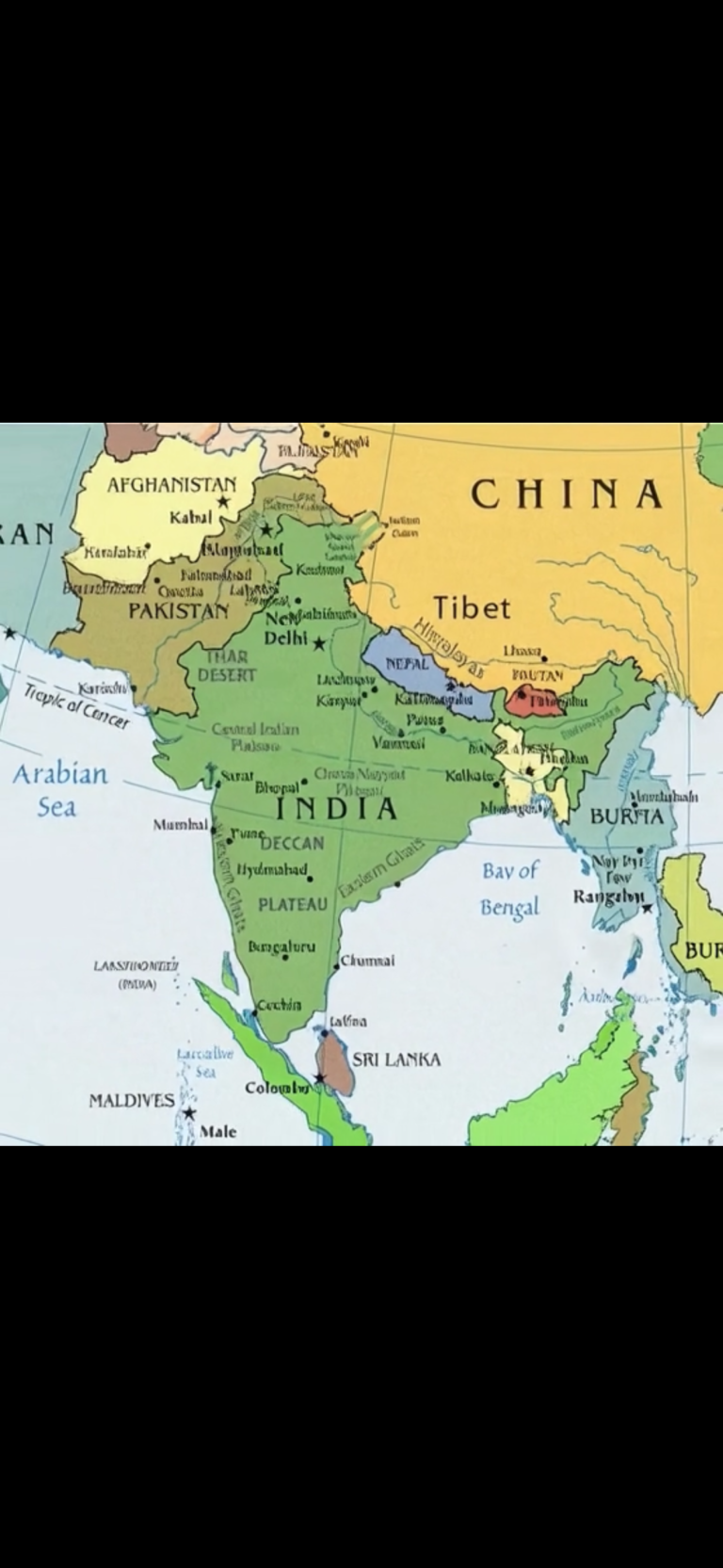


In the jagged peaks of North Waziristan, Havildar Javed crouched behind a sandbag wall, the night torn by RPGs and the crack of Indian-made rifles in Taliban hands. At 34, Javed was a soldier of the Pakistan Army, stationed at a forward operating post on Pakistan and Afghanistan’s border, where insurgents, fuelled by India through proxies like Tehreek-e-Taliban Pakistan, had waged a relentless war. Intelligence reports seared his mind: smuggled weapons, operatives slipping across from Afghanistan, part of a plot to destabilise Pakistan, echoing Kulbhushan Jadhav’s schemes. But a deeper wound cut through—the faltering WhatsApp message from his wife, Ayesha, in Chowbara, his village near Sialkot, her voice thick with rage: “Noor’s hurt herself, Javed. Zainab’s fading”.
In Chowbara, a vibrant village of brick houses, golden wheat fields swaying under the Punjab sun, and the rhythmic thump of dhol drums at melas, Ayesha and their daughters, Noor, 11, and Zainab, 7, teetered on the brink. His wife was staying with his parents and a younger sister at his ancestral house. Noor, overwhelmed by anxiety, had fallen during a game with her street friends, fracturing her arm, and now lay in Chowbara’s rundown dispensary, its bare shelves and single rusty bed a far cry from Sialkot’s hospitals. Zainab, silent for weeks, clung to Javed’s old shalwar kameez, its grey fabric steeped in the scent of Lohri bonfires and the village’s mango groves. Ayesha’s messages, sent over Chowbara’s patchy 3G, grew bitter: “Noor has fractured her arm.” Javed’s heart ached for the neem tree where he taught Noor to climb trees, where Zainab played with her friends, and for the evenings sitting with his friends on a Dhabba at the end of the street. He burnt for Pakistan, he burnt for his platoon, and he burnt for the daughters.
The ambush came at midnight, insurgents unleashing a storm of gunfire and Indian-supplied RPGs, their blasts rivalling the fireworks of Chowbara’s Shab-e-Barat. As mortars shook the ground, Ayesha’s call broke through the static: “Noor’s in the dispensary, Javed! Her arm’s broken; Zainab won’t eat.” Her words collided with a blast that killed a young soldier beside Javed, his blood soaking Javed’s boots. Noor’s cries in that crumbling dispensary, Zainab’s silence under the peepal tree, Ayesha’s tears at the village house—I’m their father, but I’m not available when needed. India’s guns arm these killers, but am I shattering my family? I am their defender, I am their deserter, I am their doom. Javed screamed into the chaos, issuing commands, but his soul unravelled, torn between his daughters’ pain and the lives of his platoon, his mind flooded with Chowbara’s colours—the yellow of mustard fields, the jingle of anklets at melas, the warmth of lassi shared under the banyan tree.
He stayed, rallying his men, repelling the insurgents, their smuggled rifles no match for his resolve. In a gasping lull, he reached on his mobile to his former company commander, Maj Sohail, who was posted at Sialkot, and briefly told him about his daughter’s injury and urgent treatment at CMH Sialkot. Maj Sohail promised aid, and Javed went back to giving orders to his platoon.
Dawn broke, terrorists were repulsed, but Javed’s victory was hollow. Two soldiers embraced Shahadat, their faces etched in his mind. Ayesha texted: “Noor’s stable. Thanks to Maj Sohail for his personal interest.” The words of his wife relieved him for a while. Javed requested leave, though the insurgency, stoked by India’s meddling, loomed like a monsoon storm. He wrote Noor a letter in Urdu, promising to return to enjoy with them under the banyan tree and fly kites and play dolls. He recorded a voice note, vowing one daily, each word infused with the cadence of a Punjabi folk song, a fragile thread to mend his family’s trust, even as the border’s shadow promised another fight.
Javed’s voice notes became a ritual, each one a plea to Noor and Zainab, a whisper of love across the miles, carrying the nostalgia of Chowbara’s traditions—spinning tops at the mela, sharing jaggery-sweet roti by the Lohri fire, dancing to dhol beats under the Punjab sky. He fought for Pakistan, for the mountains that shielded his nation from India’s hidden hands. But in the quiet of the forward post, under a sky scarred by war, Javed fought hardest for the day he’d walk through Chowbara’s dusty lanes, past the buffalo pens, the masjid’s minaret, and the swaying mustard fields, take his daughters in his arms, and be more than a fading signal, his heart full of Punjab’s songs and the promise of home.