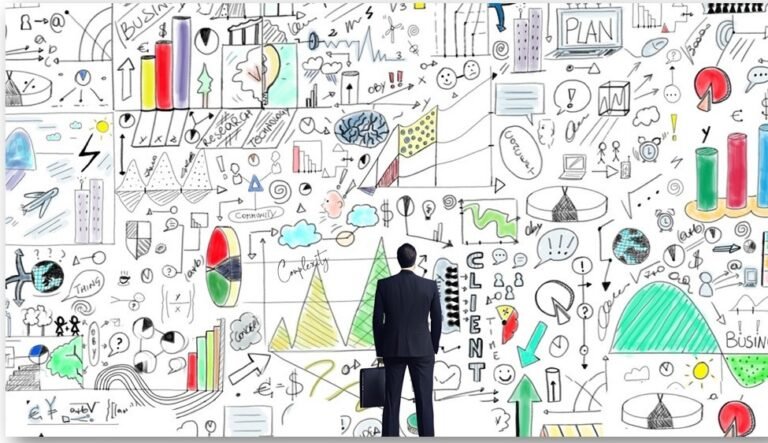


Imagine society is not just a crowd of people, but a giant, humming web made entirely of conversations. Every chat, news story, court decision, political statement, academic debate and even a scientist’s report is a thread in this web. These threads are more than words—they are messages sent, spoken, and understood and misunderstood.
This giant web lives in a world of meaning. At every single moment, every part of a conversation chooses what to say or do next from countless possibilities.
Over a long, long time, this web organized itself into separate, special zones. Each zone has one very important job for society and sees the world in its own strict way:
· The Economy decides what is paid for and what is not.
· The Law decides what is legal and what is illegal.
· Science decides what is true and what is false.
· Politics decides who is in power in government and who is not.
· The Media decides what is important information and what is not.
These zones are closed in their thinking—a scientist can’t declare something “illegal,” only “true or false.” But they are constantly touching and affecting each other at special connection points. For example, property is where the Economy meets the Law. A constitution is where Politics is limited by Law.
So, modern society is like this decentralized network of powerful, independent zones. There is no single control room or king at the top. The system’s great strength—and its great risk—is this separation. Big problems happen when one zone’s thinking, like the Economy’s “Can we pay for it?” invades another zone, like the Law’s “Is it fair?”
Where are the people in this web? We are not inside the web itself. Our minds and feelings exist around it, in its environment. We are separate living systems, forever connected to the web. We feed it our words and are shaped by its messages, but we never fully become it. The social web spins its own life from the communication sparks leaping between us.
—
The Rise of Digital Bunkers
This idea connects to how people form groups. There are two main types of social glue:
· Bonding Capital: Strong ties within a similar group (like a close club or community). It provides support but can exclude others.
· Bridging Capital: Weaker ties that connect different groups (like a community festival). It builds wider trust and cooperation.
Social media has twisted this glue. Its design—personalized feeds, likes, shares—doesn’t just create bonding; it supercharges it into something new and dangerous: Bunkered Capital.
Bunkered capital is bonding turned into a weapon by the internet.
It builds echo chambers. Algorithms feed people content that confirms their beliefs, brick by brick. Inside these “bunkers,” you get the most rewards (likes, shares) for attacking outsiders and defending your group. Nuance is punished.
It’s all about identity. Your online identity (political, cultural) becomes a fortress to defend.
It runs on outrage. Groups bond by sharing anger, victimhood, and opposition to a common enemy (“the other side”).
It mobilizes, but doesn’t unite. This capital is great for quickly rallying your group for an online campaign or vote, but it destroys the broader trust needed for society to solve big problems together.
Bridging, however, is hard on social media. Building understanding across differences is slow, gets fewer clicks, and can get you attacked by both sides. Platforms often make more money from conflict than from calm conversation.
Movements like #MeToo, Black Lives Matter, or anti-vaccine groups show this paradox. They have incredible internal bonding—they can share information and mobilize faster than ever. But they are often deeply divisive for society because their strength comes from bunkering, from defining themselves against an “other.”
A society dominated by bunkered capital faces huge problems
· Politics becomes a war between fortresses, not a debate among citizens.
· Different groups live in totally different information worlds with different “facts.”
· Society loses the ability to work together on huge issues like climate change or pandemics because there’s no shared trust.
Generation Z: The Bunkered Bridge-Builders
This brings us to a major challenge and opportunity in many places, including Pakistan: a huge youth population, mostly from Generation Z (born ~1997-2012). They are not just one thing; they are a bunkered generation forced to become a bridging generation.
Why they are “Bunkered”:
· True Digital Natives: They grew up with smartphones. They’ve created “digital bunkers”—private group chats, niche online spaces—to retreat from the chaos of the wider internet.
· Shaped by Crisis: Their coming-of-age has been marked by economic worries, climate anxiety, school lockdowns, and the pandemic. This creates a cautious, risk-averse “bunker mentality” focused on safety.
· Facing an Uncertain Future: With high costs of living and AI changing jobs, they are skeptical of old paths. Their bunker can be a pragmatic focus on side-jobs and safe choices.
Why they are “Bridge-Builders”:
· Digitally Fluent Connectors: They can easily link with people across the globe, building bridges between different cultures and causes.
· Diverse and Inclusive: As the most diverse generation, they naturally challenge old divisions and build understanding across identities.
· Practical Problem-Solvers: Facing big systemic issues, they use technology and grassroots action to try and fix things, bridging idealism and action.
The most accurate view is that Gen Z builds bridges from within their bunkers.
The bunker is their safe control room. From there, they use their digital tools to launch bridging missions—solving specific issues, building trust in their networks, and trying to mend the divides left by older generations. They are architects of a new way: interconnected yet protected.
Can We Redesign the Digital World?
So, are we doomed to live in this Fragmented Archipelago of hostile online fortresses? The internet’s current “fuel” is our attention, and anger gets more attention than thoughtful conversation. Polarization is good for business.
But we can change it, if we choose to. The blueprint exists:
1. Change the Scoreboard: Platforms should reward bridge-building—content that is shared across divides, that sparks thoughtful discussion—not just outrage.
2. Redesign the Tools: Create features that encourage understanding, like prompts to pause before posting, or tools to express uncertainty. Build digital spaces made for dialogue, not performance.
3. Rewire the Algorithms: Force recommendation engines to respectfully introduce us to different viewpoints and promote ideas that travel between groups.
4. Find a New Fuel: Support online spaces with a goal of healthy society, not just endless engagement. This could mean new business models or public funding.
There is hope. People are growing tired of constant outrage. Small experiments in digital diplomacy prove bridges can be built. New laws are beginning to ask tech companies to consider their damage to society.
The challenge is huge. Our tribal instincts are strong, and many companies profit from division. The future won’t be one global town, but an internet with both safe community harbors and specially designed spaces where bridge-building is the goal.
We are not doomed to the archipelago. But escaping it requires a conscious choice to value bridges over bunkers and to demand digital spaces that reflect our better nature. The future of our shared world depends on which blueprint we decide to build.