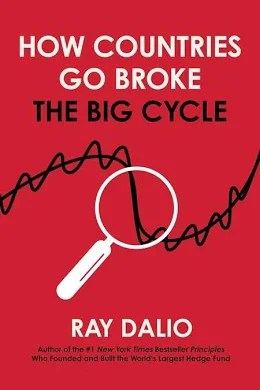
Ray Dalio’s cycle-thinking frameworkhttps://economicprinciples.org/downloads/How-Countries-Go-Broke.pdf has dominated strategic discourse for a decade. His approach maps macro patterns with impressive clarity: debt cycles that stretch and snap, economic seasons that rotate predictably, geopolitical rhythms that repeat across centuries. His big-picture model has produced genuine insights. But Dalio’s system has a fatal assumption buried in its elegance—that the underlying architecture remains stable enough for patterns to repeat.
What happens when the system itself is fracturing?
The Dalio Framework and Its Blind Spot
Dalio’s strength is descriptive power.
What happens when the system itself is fracturing?
The Dalio Framework and Its Blind Spot
Dalio’s strength is descriptive power.
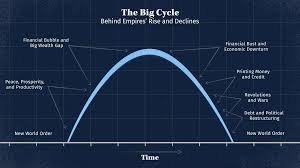 He shows you what pattern you’re in. Late-cycle leverage. Currency instability. Geopolitical repositioning. The framework works because these patterns do repeat—and recognition itself becomes a strategic asset.
But recognition alone doesn’t move mountains.
Consider a national leader who reads Dalio correctly: she sees her country entering a late-cycle downturn, recognizes the debt trap forming, understands the geopolitical realignment pressure. She has the map. And yet she remains locked in policies that deepen the crisis. Austerity deepens the recession. Military posturing escalates regional tension. Elite capture prevents institutional reform. The pattern is clear, but nothing changes.
This is where Dalio’s framework stops explaining. It describes the trap but cannot answer the only question that matters: Why can’t decision-makers act on what they see?
The Diagnostic Gap: “Thinking Clear” and Ground Reality
Dr. Atique Ur Rehman’s framework answers this directly.Where Dalio maps external cycles, Ur Rehman maps the internal architecture of strategic failure. His concept of “Thinking Clear” identifies something more precise than just “bad information.”
The argument is this: Strategic decisions are made based on a mental model of reality—not reality itself. The gap between what is actually happening and what a decision-maker’s mental model contains is the failure point. Most leaders fail not because they’re stupid, but because they’re operating on a representation of reality that their own system has constructed for them.
This is the cognitive-reality gap, and it has specific architecture.
Ground reality exists at the edge: what’s actually happening in markets, battlefields, villages, bureaucracies. But a decision-maker never touches ground reality directly. Instead, ground reality is filtered through institutional layers:
Layer 1: Ground observation. Field agents, local officials, operational staff see fragments of reality.
Layer 2: Institutional interpretation. These observations flow upward through organizational channels. Each layer adds interpretation based on institutional interests. An intelligence agency interprets security data through a lens of threat maximization (to justify budget and authority). A ministry interprets economic data through a lens of policy vindication. The observations become narratives shaped by institutional incentives.
Layer 3: Compression. By the time information reaches the decision-maker, it has been compressed—details stripped away, complexity flattened into summary form. A year of border tension becomes “regional instability.” Structural unemployment becomes “labor market adjustment.”
Layer 4: Mental model integration. The decision-maker receives the compressed narrative and integrates it into their existing mental model of how the system works. If the mental model is outdated or wrong, the new information gets filtered again. It’s either dismissed as noise, or distorted to fit the existing framework.
The result: A decision-maker can be highly intelligent and still hold a mental model of reality that is systematically wrong—not because of dishonesty, but because the institutional architecture that feeds them information is designed to filter, interpret, and compress rather than clarify.
“Thinking Clear” maps this cascade. It asks: At which layers is information being lost? Where is institutional bias strongest? Which parts of ground reality is the system structurally blind to?
Consider a concrete example: A development minister wants to understand why education reform keeps failing. She receives briefings from her education bureaucracy. They report curriculum issues, teacher training gaps, funding shortfalls. All true. But what the bureaucracy doesn’t report is equally important: the patronage networks that prevent merit-based hiring, the exam corruption that makes certificates meaningless, the incentive structure that rewards credential inflation over capability development. Not because the bureaucracy is dishonest, but because reporting these would require the bureaucracy to diagnose its own dysfunction.
So the minister’s mental model contains “education system with known problems” when the actual reality is “education system structurally captured by elites who benefit from its dysfunction.” The gap between these two pictures is the difference between “reform is hard” and “reform threatens the people who control the system.”
Ur Rehman’s diagnostic framework makes this gap visible. It asks: What is your system structurally blind to? What information is being filtered by institutional interests? Which pieces of ground reality never make it into your mental model?
This is not the same as saying “you have bad intelligence.” It’s saying: Your system for turning ground reality into decision-relevant information is systematically shaped by institutional interests—and this shapes what you think is possible, what you think is true, and what you think needs doing.
The cognitive-reality gap is the central failure point that Dalio’s cycles don’t address.
Why People Can’t Exit the Trap: The Architecture of Social Pressure
But there’s a deeper layer. “Against the Current”—Dr Rehman’s framework on social dynamics—reveals why even leaders who perceive the gap often remain paralyzed.
Dalio maps geopolitical cycles. Ur Rehman maps the social pressure architecture that locks people into patterns even when breaking them would be rational. This isn’t about cognition failing; it’s about incentive structures, elite capture, fear of institutional disruption, and the psychology of sunk costs.
Consider Pakistan’s education crisis. The problem is well-documented. The solutions are theoretically known. The institutional failures are mapped. Yet for decades, reform stalls. Why?
Not because leaders can’t see the pattern. They can. Not because the cycle analysis is wrong—Dalio’s framework would correctly identify this as a capability-deficit crisis on a geopolitical timeline.
Rather, reform stalls because:
1. Institutional inertia is profitable for elites. Changing education systems threatens patronage networks, exam-based corruption schemes, and the credentialing advantage of existing power structures.
2. Disruption carries asymmetric costs. A policymaker who initiates reform owns the transition crisis but won’t be in office to claim the long-term gains. The political math is brutal.
3. Pressure dynamics create collective paralysis. Even reformers are embedded in systems where visible dissent carries costs. Fear, not ignorance, locks the system.
Dalio’s framework has nothing to say about this. His cycles are impersonal, inevitable-feeling. They don’t explain the human architecture—the social pressures, institutional incentives, and psychological constraints—that keep people locked in destructive equilibrium even when they recognize it as such.
Ur Rehman’s framework fills this space. It maps the invisible architecture that makes intelligent people make seemingly irrational choices. It shows that the failure isn’t in seeing the cycle—it’s in the structural inability to exit it.
The Critical Distinction: Descriptive vs. Diagnostic
This is the central insight worth holding onto:
Dalio’s cycles are descriptive. They explain patterns after they emerge. They answer: What is the pattern? How does it typically evolve?
Ur Rehman’s frameworks are diagnostic. They locate the failure points that create patterns in the first place. They answer: What information gap is driving this? What structural pressure is locking people into this behavior?
A descriptive framework predicts waves. A diagnostic framework teaches you to swim.
Practical Implication: The Two Maps
Imagine two leaders facing the same strategic crisis:
Leader A uses Dalio. She correctly recognizes she’s in a late-cycle downturn. She sees the debt trap forming. She understands the geopolitical pressure. She has perfect cycle awareness.
But when she convenes her cabinet to discuss response, she meets institutional resistance she doesn’t fully understand. Intelligence agencies report delayed information from fragmented sources. Her advisors interpret the same data differently based on departmental interests. Powerful constituencies block reform. She finds herself constrained by dynamics she can name but not navigate. The map shows the wave. She doesn’t know why her sailors won’t row against it.
Leader B uses both frameworks. She reads the Dalio cycle correctly—same awareness as Leader A. But she simultaneously maps the information gap in her own system: Where is intelligence being filtered? Which institutional incentives are misaligned with strategic reality? What social pressures are constraining her team?
More importantly, she diagnoses the barriers to change: not because people are irrational, but because the cost structure of reform is misaligned with political timelines. She sees that her defense establishment has a vested interest in threat inflation. She recognizes that her bureaucracy will interpret ambiguous information to protect its own authority.
With this diagnosis, she can design systems that shift these dynamics. She restructures information flow to reduce compression and delay. She realigns institutional incentives. She builds coalitions that redistribute the costs of change. She doesn’t just predict the wave—she changes what it means to resist it.
One leader is predictive. The other is transformative.
The Pakistan Test Case: Why Cycles Alone Aren’t Enough
In Pakistan’s context, geopolitical cycles are constant. Economic cycles are textbook-predictable. Dalio’s framework would correctly identify structural imbalances, debt dynamics, and regional repositioning.
But the cycles that actually matter—institutional reform cycles, capability development cycles, policy coordination cycles—remain broken.
A Dalio analysis would say: Pakistan is in a late-stage structural crisis with limited options. True, and not actionable.
A Dr Rehman diagnosis would ask:
• What does the state actually know about its own capacity? (Answer: far less than it thinks, because information flows through silos that don’t communicate.)
• What is preventing coordination? (Answer: institutional turf wars and incentive misalignment, not technical disagreement.)
• Why can’t elites exit corruption equilibrium? (Answer: because the cost of exit falls on individuals while benefits accrue to society—a collective action problem embedded in the system.)
This diagnosis suggests different levers: not waiting for the cycle to shift, but restructuring information architecture, realigning institutional incentives, and building reform coalitions that shift the payoff matrix.
The cycle tells you what’s happening. The diagnosis tells you where to push.
Integration: The Real Power
The strongest position isn’t choosing between these frameworks. It’s using them together.
Start with Dalio: understand what structural pattern you’re in. This grounds your analysis in reality and prevents fantasy scenarios.
Move to Ur Rehman: diagnose why your system can’t respond effectively to that pattern. Map the information gaps, institutional misalignments, and social pressure architectures that are locking you in place.
Then act: not to “beat the cycle” (impossible), but to reshape the system’s capacity to navigate the cycle consciously.
For strategists operating in constrained environments—emerging economies, post-conflict states, complex bureaucracies, organizations trapped in dysfunctional equilibrium—this distinction is everything.
Dalio gives you the weather forecast. Ur Rehman gives you the compass—and the tools to recognize what’s actually blocking your ship from moving, even in favorable winds.
What This Means for Your Strategy
If you’re a policymaker in an emerging economy:
• Know which cycle you’re in (Dalio).
• Diagnose why your institutions can’t respond (Ur Rehman).
• Design interventions at the failure points, not at the level of the cycle itself.
If you’re leading organizational change in a complex system:
• Recognize the structural pressures your organization faces (Dalio).
• Map the information silos and institutional incentives that prevent adaptation (Ur Rehman).
• Restructure for both awareness and alignment, not just planning.
If you’re an intellectual trying to understand why intelligent people repeatedly make destructive choices:
• The cycles are real. They constrain what’s possible.
• But the system’s inability to respond isn’t inevitable. It’s architectural.
• Change the architecture, and the same cycle becomes navigable instead of crushing.
The integration of descriptive and diagnostic thinking is the next evolution in strategic frameworks. Dalio showed us what patterns look like. Ur Rehman shows us how to actually change them.
That’s the distinction worth understanding.

About the Author