Paradigm Shift
A “paradigm” is the lens, framework, or perspective through which we see, understand, and interpret the world. A “paradigm shift” means bringing about a sudden and profound change in our way of thinking and viewing things.
For example, a man was riding a subway train in New York. It was Sunday, so the train was quiet and calm. Then a man boarded with his children. His children were making a lot of noise, throwing things, and bothering other passengers, but the father sat silently with his eyes closed and did not stop them at all. The other passengers grew extremely angry at his indifference. Finally, when patience ran out, a passenger confronted the father, telling him to control his children.
The man opened his eyes as if waking from deep thought and said, “You are absolutely right, I should do something… Actually, we are coming from the hospital where their mother passed away an hour ago. I don’t know what to think, and perhaps these children are also struggling to cope with this shock.”
Hearing this, the paradigm of all the passengers shifted instantly—and this is precisely what a “paradigm shift” is. Their irritation and anger immediately transformed into empathy, grief, and a desire to help, because after learning the real truth of the situation, their entire way of thinking had completely changed.
—
The 7 Habits of Highly Effective People – Stephen Covey’s very famous book – contains one habit described as: Seek first to understand, then to be understood. According to Covey, the biggest problem in human communication is that we do not listen to others with the intention of understanding them; rather, we listen so that we can give them our reply.
This habit teaches us that we should practice “empathic listening.” That is, in any discussion or conversation, before trying to get our point across, we should put ourselves in the other person’s shoes and deeply try to understand their emotions, thoughts, and perspective. When you truly listen to and understand others from the heart, they begin to feel respect and trust for you. Once their defensiveness fades, they become open-minded and ready to understand your point of view as well. This habit is the foundation of the best and most effective interpersonal relationships.
—
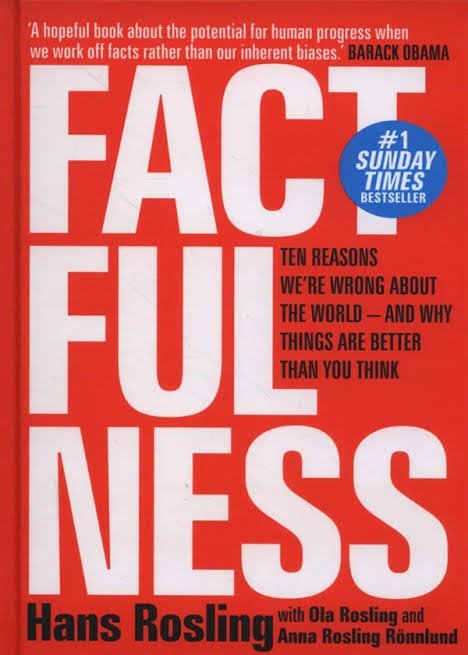
According to Hans Rosling’s book Factfulness, humans have a tendency to perceive the state of the world as much worse and more dangerous than it actually is. The author believes that this “overdramatic worldview” of ours is actually the result of certain innate “overdramatic instincts.” These instincts are our inborn biases that force us to see the world through exaggeration rather than facts and data.
In the book, these 10 overdramatic instincts are detailed as follows:
· The Gap Instinct – The tendency to divide things into two distinct and conflicting groups, completely ignoring the middle ground or middle class between them.
· The Negativity Instinct – The habit of paying more attention to bad or negative things compared to good or positive ones.
· The Straight Line Instinct – Assuming that whatever was the case five years ago will continue to progress in the same straight line into the future.
· The Fear Instinct – Due to innate fears like violence, imprisonment, and disease, we estimate dangers to be much greater than they actually are.
· The Size Instinct – Misjudging the importance of a single incident or victim while forgetting the broader context and facts.
· The Generalization Instinct – Forming uniform opinions about entire groups of individuals and countries despite there being significant differences among them.
· The Destiny Instinct – Believing that the fate or future of people, countries, religions, and cultures is determined by their inborn and inherent characteristics.
· The Single Perspective Instinct – The preference for a single cause and a single solution to any problem.
· The Blame Instinct – When something bad happens, feeling the need to find a scapegoat or a clear, simple cause rather than understanding the complex system behind it.
· The Urgency Instinct – Feeling the need to take immediate action as soon as any potential danger is perceived.
Factfulness presents an antidote to these very instincts and teaches us how we can overcome these inborn biases by using facts and accurate data.
About the Author