{"source_type":"vicut","data":{"appVersion":"18.2.0","os":"ios","enterFrom":"cover","client_key":"aw889s25wozf8s7e","pictureId":"456EDF72-10E7-4861-ABCD-0760B7A41E1B","region":"PK","product":"vicut","source_platform":"mobile_1","editType":"image_edit","capability_name":"capcut_photo_editor","source_type":"vicut"},"tiktok_developers_3p_anchor_params":"{"pictureId":"456EDF72-10E7-4861-ABCD-0760B7A41E1B","capability_name":"capcut_photo_editor","appVersion":"18.2.0","product":"vicut","source_type":"vicut","source_platform":"mobile_1","editType":"image_edit","os":"ios","region":"PK","client_key":"aw889s25wozf8s7e","enterFrom":"cover"}"}
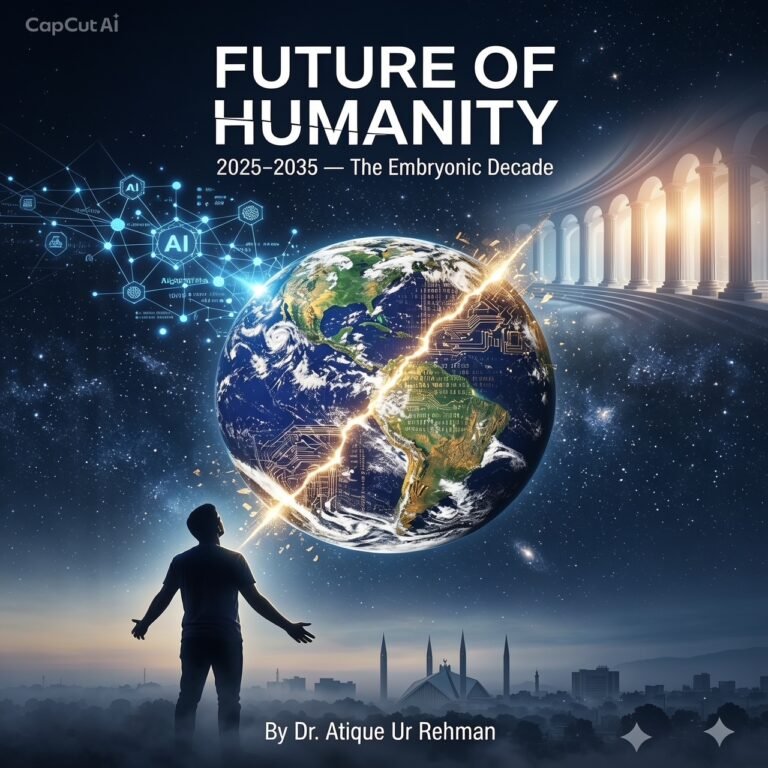
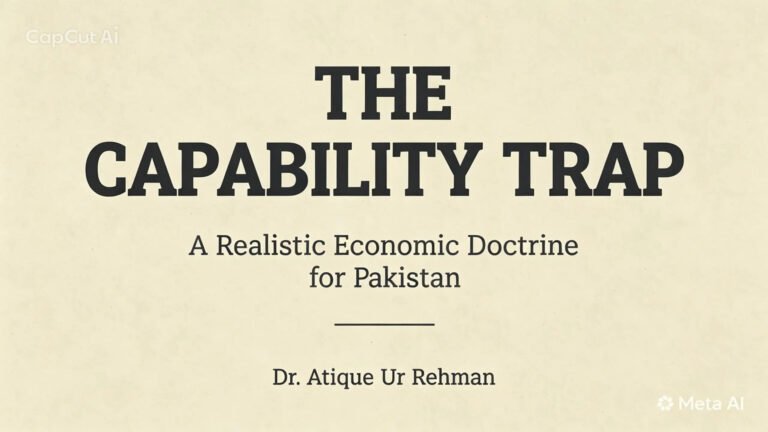
Written by Dr Atique Ur Rehman is available at
https://atiquesheikh.gumroad.com/l/bqkjs
Book is about.
Pakistan’s stagnation isn’t a financing problem (25 IMF arrangements since 1950 prove money is available) or a knowledge problem (its freelance/IT sector ranks 16th globally on talent). It’s a discretion problem: the same elite networks positioned to write the rules on tax, energy pricing, and credit are positioned to benefit from how those rules are written — costing the state 4.6% of GDP in exemptions and 5–6.5% in corruption, by the IMF’s own estimate.
The book tests that idea across six parts: a structural diagnosis grounded in current data (Part I); five international comparators stress-tested rather than cited as inspiration — including a hard warning that Bangladesh shares Pakistan’s tax-base weakness rather than solving it (Part II); a systems map of the self-reinforcing loops that keep producing the same crisis (Part III); and a growth model built on Pakistan’s own accidental proof-of-concept — IT exports, taxed at near-zero and freed from elite discretion, grew five times faster than protected textiles (Part IV).
The doctrine names two operating pillars: Algorithmic Governance (removing human discretion via production-point digital monitoring) and enclave-bypass (insulated SEZs, Vietnam/Malaysia-style). Implementation is sequenced by political feasibility, not ambition (Part V), closing on one instruction (Part VI): real transformation comes from building around the rent-seeking equilibrium, not waiting to defeat it first.
About the Author